
Animals · Reptiles and amphibians
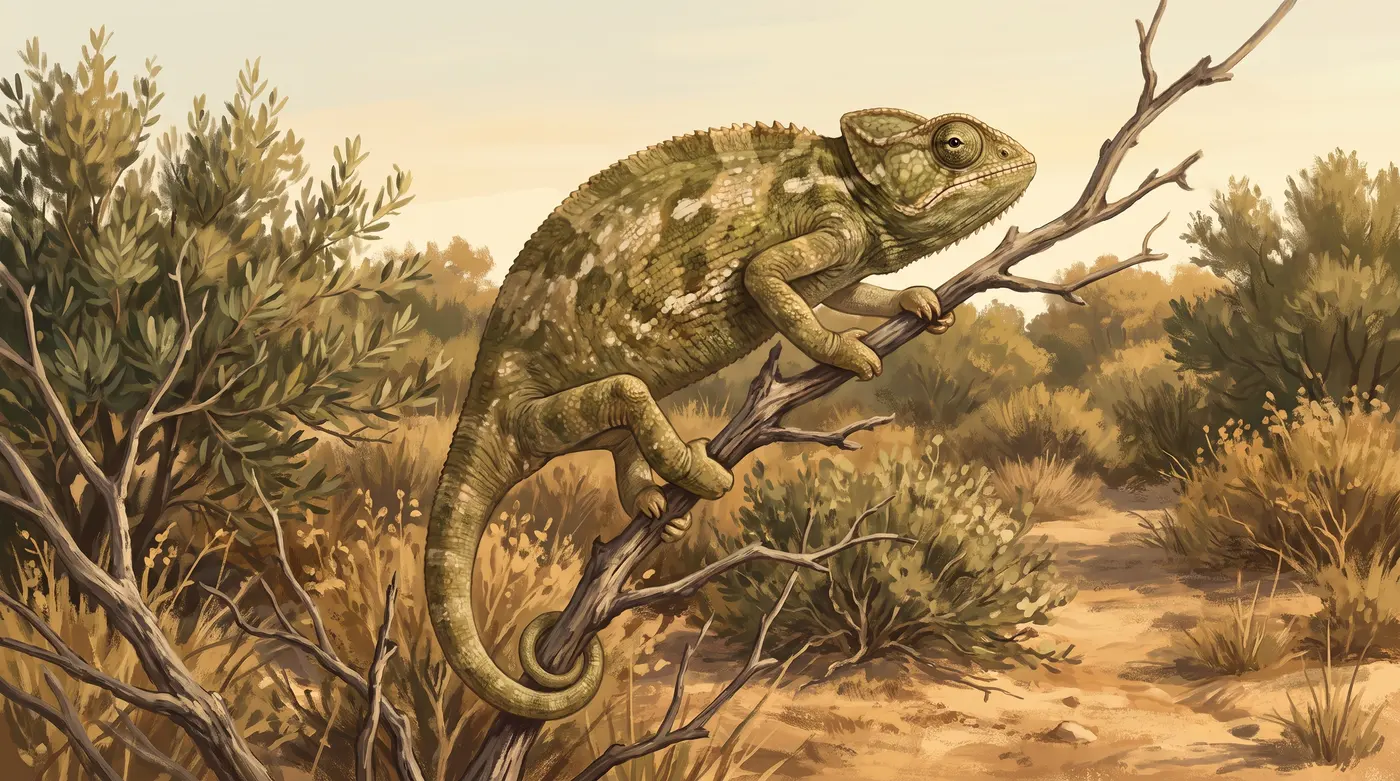
Chameleon
Chamaeleo chamaeleon
Skin that responds to the surrounding temperature
- Status: Safe
- Bushes and scrubland of southern Europe, North Africa, and southwestern Asia
Numbers
- Weight
- 1,2 ozfrom 0.6 to 2 oz (Chamaeleo chamaeleon)
- Length
- 7 inbody only, from 3.5 to 7 in; the tail adds another 5 to 6 in
- Lifespan
- 13 yearsusually 12 to 13 years, up to 20; record in captivity is 22 years
- Prehensile tail
- 6 infrom 5 to 6 in, almost as long as the body
- Eggs per clutch
- 40 eggsfrom 30 to 40, laid in late summer
- Longevity in captivity
- 22 yearsknown record; in the wild usually 12 to 13 years
Ten fun facts
that the skin color of the Chameleon depends on the surrounding environment and temperature, changing in a sudden manner.
that at night the Chameleon becomes much lighter in color, returning to its usual green shade during the day.
that the tail of the Chameleon measures five or six inches and wraps around tree branches like a fifth limb.
that the toes on each foot are grouped into two prehensile claws that grip branches firmly like a pair of pliers.
that the sticky tongue captures prey from a distance, allowing the Chameleon to swallow insects whole without chewing them first.
that the largest male Chameleons do not eat only insects, but also hunt small lizards, mice, and young birds.
that eggs laid in late summer remain hidden in the ground all winter and hatch only during the following spring.
that a single female can lay between thirty and forty eggs in a single clutch during late summer.
that the two eyes move independently from each other, allowing the animal to look in two different directions at once.
that established populations exist in southern Italy, having arrived originally from North Africa and the Middle East.
The quiz answers
The first one is the question printed in your book: here is the answer. The other four are extra.
Question 1 of 5★ this one is in your book
What determines the skin color of the Chameleon?
Question 2 of 5
What is the tail of the Chameleon used for?
Question 3 of 5
How does it capture its prey?
Question 4 of 5
When do the eggs laid in late summer hatch?
Question 5 of 5
How long does a Chameleon usually live?
Try it yourself
Measure seven inches on a ruler and add another six inches for the tail to see the maximum total size of a Chameleon.
Try staying completely motionless for three minutes while focusing on a distant spot, just like a hunting Chameleon targets its prey.
Mark late August and the following spring on a calendar to visualize how long the eggs remain unhatched underground during winter.
Data from Wikidata (Q577924) and Wikipedia (Common chameleon).