
- Status: Unknown
- Cold sea floors of the western Atlantic Ocean, Gulf of Mexico, and Caribbean Sea
Numbers
- Weight
- 3,7 lbup to 3.7 lb
- Length
- 14 intypical size between 7.5 and 14 in; the largest confirmed specimen measured about 20 in
- Depth
- 7000 ftthe genus is abundant between 1,000 and 7,000 feet
- Eye facets
- 4000 facetsfor each of the two compound eyes
- Maximum confirmed size
- 20 inten times the size of a common isopod
Ten fun facts
the first specimen was found in 1879 in fisherman nets off the Dry Tortugas in the Gulf of Mexico.
common isopods never exceed two inches, while the giant isopod measures eight to fourteen inches on average.
newspapers reported a specimen measuring thirty inches, but the largest one confirmed by scientists measured about twenty inches.
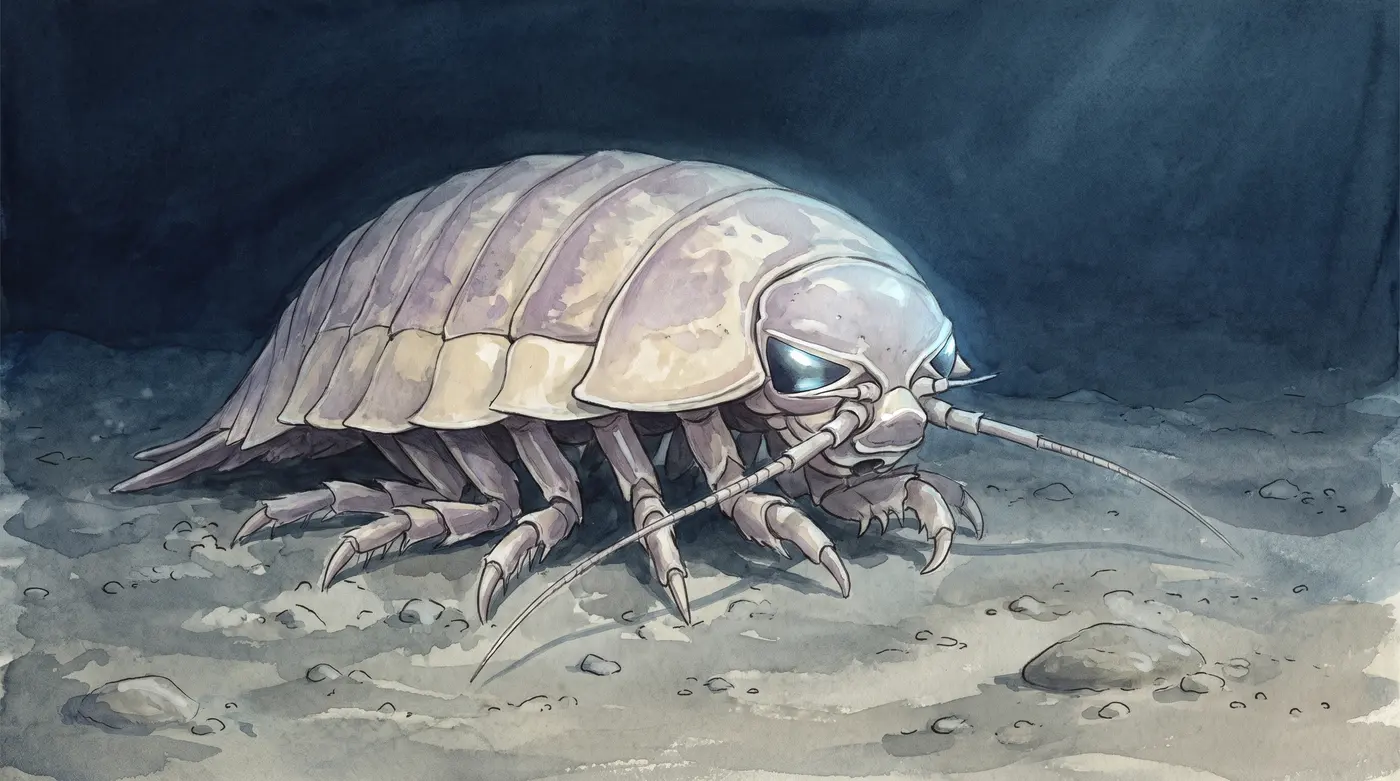
its compound eyes have more than four thousand individual facets and are located at opposite corners of the head.
a reflective layer behind the eyes bounces light back and makes them look glowing when light shines on them.
its body is divided into three main parts, which are the head, thorax, and abdomen, like almost all crustaceans.
the young are called manca, reach up to two and a half inches, and are born without a seventh pair of legs.
the female carries about the same number of eggs as smaller isopods, but her eggs are much larger in size.
it lives down to seven thousand feet deep in cold dark waters where food only drifts down from above.
it is not commercially fished, but in northern Taiwan restaurants related species are boiled and served with rice.
The quiz answers
The first one is the question printed in your book: here is the answer. The other four are extra.
Question 1 of 5★ this one is in your book
What is the phenomenon that explains its size called?
Question 2 of 5
What does the giant isopod feed on?
Question 3 of 5
How many facets does each of its eyes have?
Question 4 of 5
How are the young born?
Question 5 of 5
Down to what depth has it been found?
Try it yourself
Find a pill bug under a garden pot and measure it with a ruler, then compare its size to the fourteen inches of the giant isopod.
Draw four thousand tiny squares on a piece of graph paper to represent one eye. Try counting to one hundred and imagine the rest.
Seven thousand feet is the maximum depth where it lives. Look up the height of a mountain near your home and compare the two numbers.
Data from Wikidata (Q1366514) and Wikipedia (Bathynomus giganteus).