
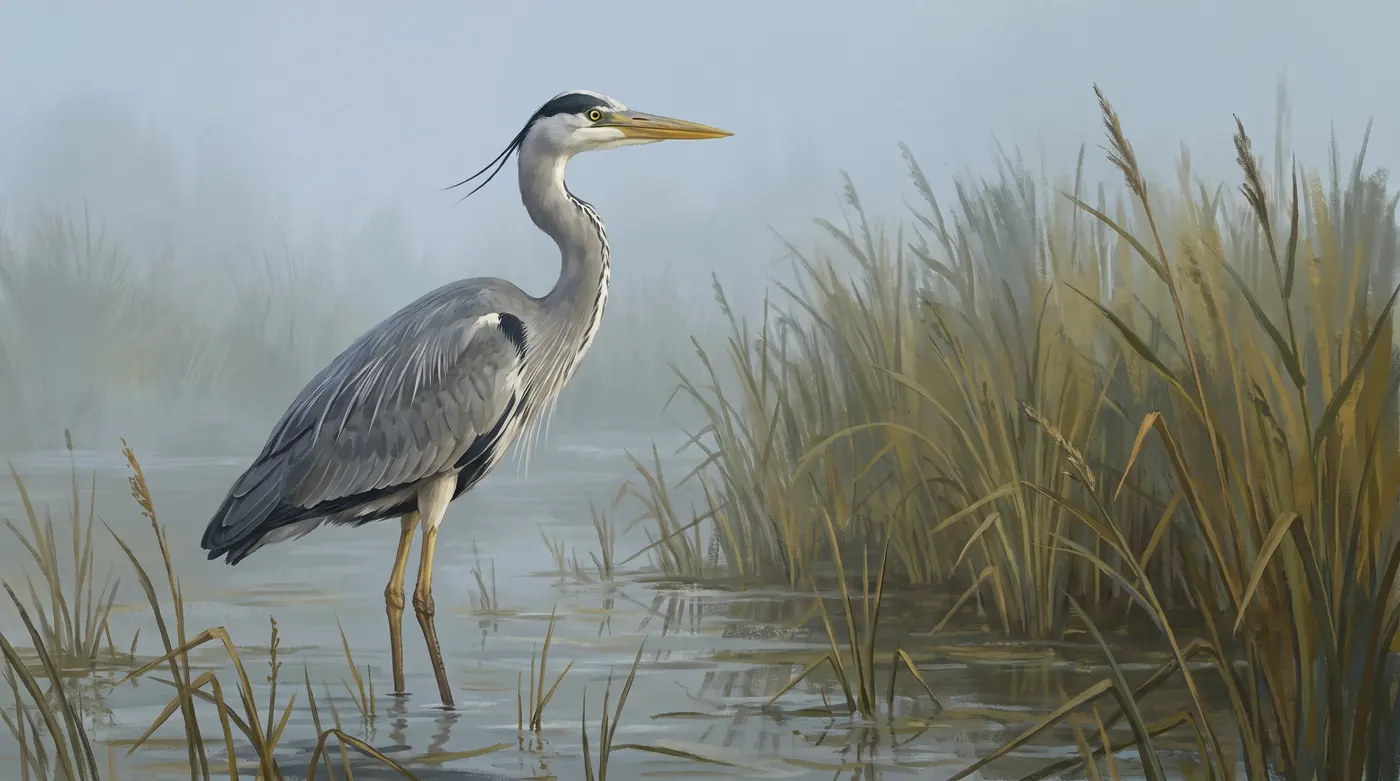
- Status: Safe
- Wetlands of Europe, Africa, and Asia, from coasts to 10,000 feet
Numbers
- Weight
- 3,3 lb2.2 to 4.6 lb
- Length
- 35 in33 to 40 in
- Height
- 37 inadult height, 35 to 39 in
- Lifespan
- 24 yearsmaximum age reached after subadult stage; 70 percent of young do not reach six months
- Wingspan
- 5,5 ftmeasurement easily reached by adults
- Maximum altitude
- 10000 ftoccasional, in some parts of the world it nests at these altitudes
- Pairs in a heronry
- 1000 pairsmaximum value, heronries can also consist of just a few pairs
Ten fun facts
is the heron species that travels furthest north, spending summers on Norwegian coasts far past the Arctic Circle.
holds its neck folded in an S-shape during flight, a trait shared by all heron species.
loses seven out of ten young before six months of age, but survivors can live up to twenty-four years.
nests in a heronry, a mixed colony of different heron species that can house up to one thousand pairs.
can travel tens of miles away from its nest or roosting spot to hunt, both day and night.
usually lives in lowlands, but in some parts of the world it nests over ten thousand feet high.
has migratory populations that travel mostly at night in flocks that can reach a few hundred individuals.
has as its closest relative the great blue heron, a very similar species living across the Americas.
is called sagi in Japan, where traditional folklore links this bird to spirits and the afterlife.
is protected by wildlife laws in many countries, allowing its population to grow in recent decades.
The quiz answers
Five questions about this animal. Pick an answer and find out if it is the right one.
Question 1 of 5
What is the wingspan of the gray heron?
Question 2 of 5
How does it hold its neck while flying?
Question 3 of 5
What is a heronry?
Question 4 of 5
For how many days are the eggs incubated?
Question 5 of 5
How old can a gray heron live if it survives youth?
Try it yourself
Spread your arms as wide as you can and ask an adult to measure you, then compare your reach to this bird's five-and-a-half-foot wingspan.
Mark twenty-five incubation days on a calendar plus fifty more days in the nest, which is how long a chick needs before taking flight.
Take ten dried beans and set aside seven to represent young that do not reach six months, leaving three that can live twenty-four years.
Data from Wikidata (Q25273) and Wikipedia (Grey heron).