
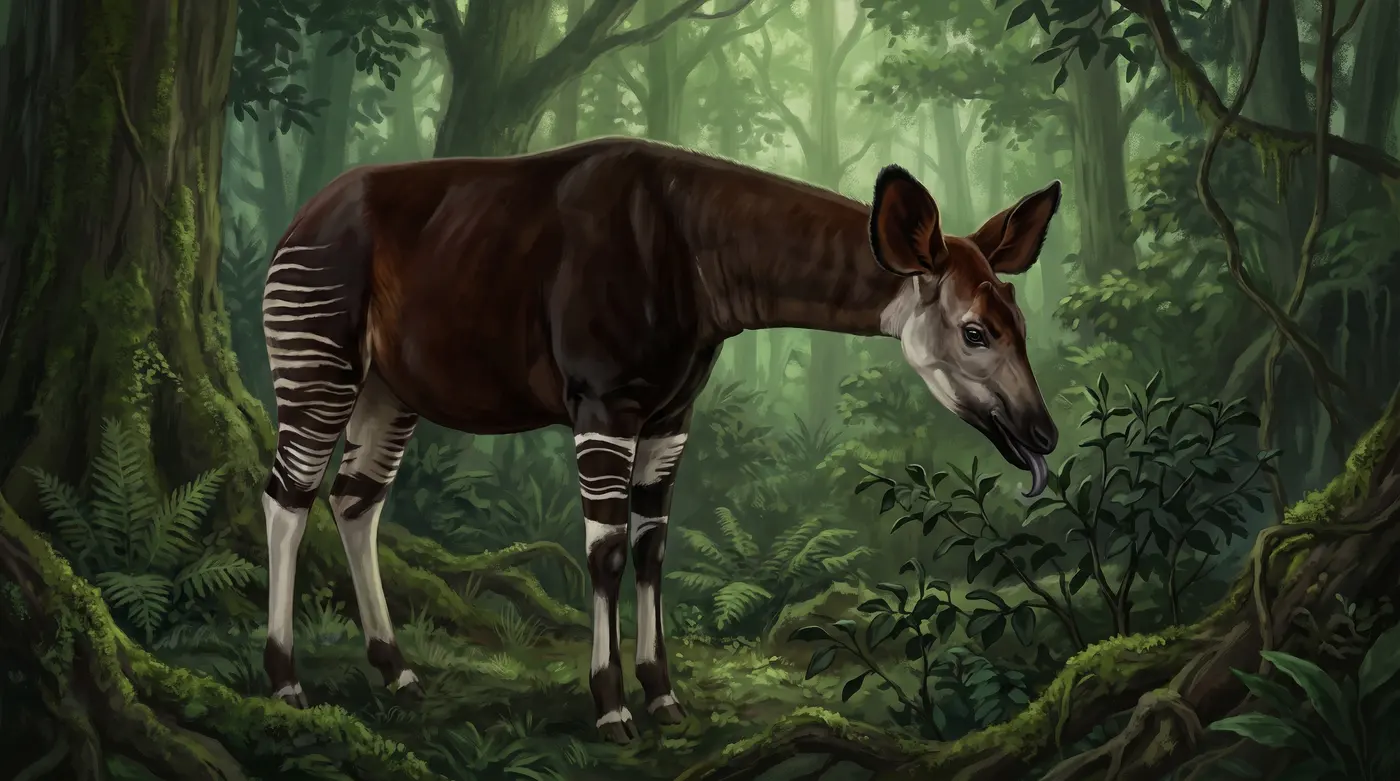
- Status: Endangered
- Forests of the Democratic Republic of the Congo, between 1,600 and 5,000 feet
Numbers
- Weight
- 606 lbfrom 440 to 770 lb; of the two Wikidata values, 550 lb fits the adult range while 48 lb corresponds to a newborn
- Length
- 98 inaverage body length
- Height
- 59 inshoulder height; females are on average 1.7 inches taller than males
- Lifespan
- 25 yearsfrom 20 to 30 years
- Tongue length
- 18 inlonger than that of a giraffe
- Gestation period
- 450 daysfrom 440 to 450 days, almost fifteen months
- Diet species count
- 100 speciesmore than one hundred, some toxic to humans
Ten fun facts
it is the only living relative of the giraffe, and together the two species make up the entire giraffid family.
its black tongue is eighteen inches long, longer than a giraffe tongue, and is even used to clean its eyes.
only males have ossicones, which are short fur covered horns measuring less than six inches in length.
females are on average nearly two inches taller than males and have a slightly more reddish coat.
it walks with a pacing gait, moving both legs on the same side together, a trait shared only with giraffes.
in the Ituri rainforest it is the only known mammal that feeds exclusively on understory vegetation.
its retina has many rod cells and its auditory bullae are large, allowing it to see and hear well in the dark.
giving birth takes three or four hours, and the female remains standing up throughout the entire process.
a genetic study from 2016 places the common ancestor of okapis and giraffes about eleven point five million years ago.
in June 2012 poachers attacked the okapi reserve, killing six guards and all fourteen animals housed there.
The quiz answers
The first one is the question printed in your book: here is the answer. The other four are extra.
Question 1 of 5★ this one is in your book
What is the closest living relative of the okapi?
Question 2 of 5
How long does pregnancy last?
Question 3 of 5
In which country does it live in the wild?
Question 4 of 5
What are the white stripes on its legs for?
Question 5 of 5
Which ones have ossicones?
Try it yourself
Measure eighteen inches on a flexible tape measure and hold it up next to your face to see the length of this animal's tongue.
Mark four hundred and fifty days from today on a calendar to count out its long pregnancy, which means waiting almost fifteen months.
Draw a brown outline with white leg stripes and squint at it from across the room to see how this camouflage works in shade.
Data from Wikidata (Q82037) and Wikipedia (Okapi).