
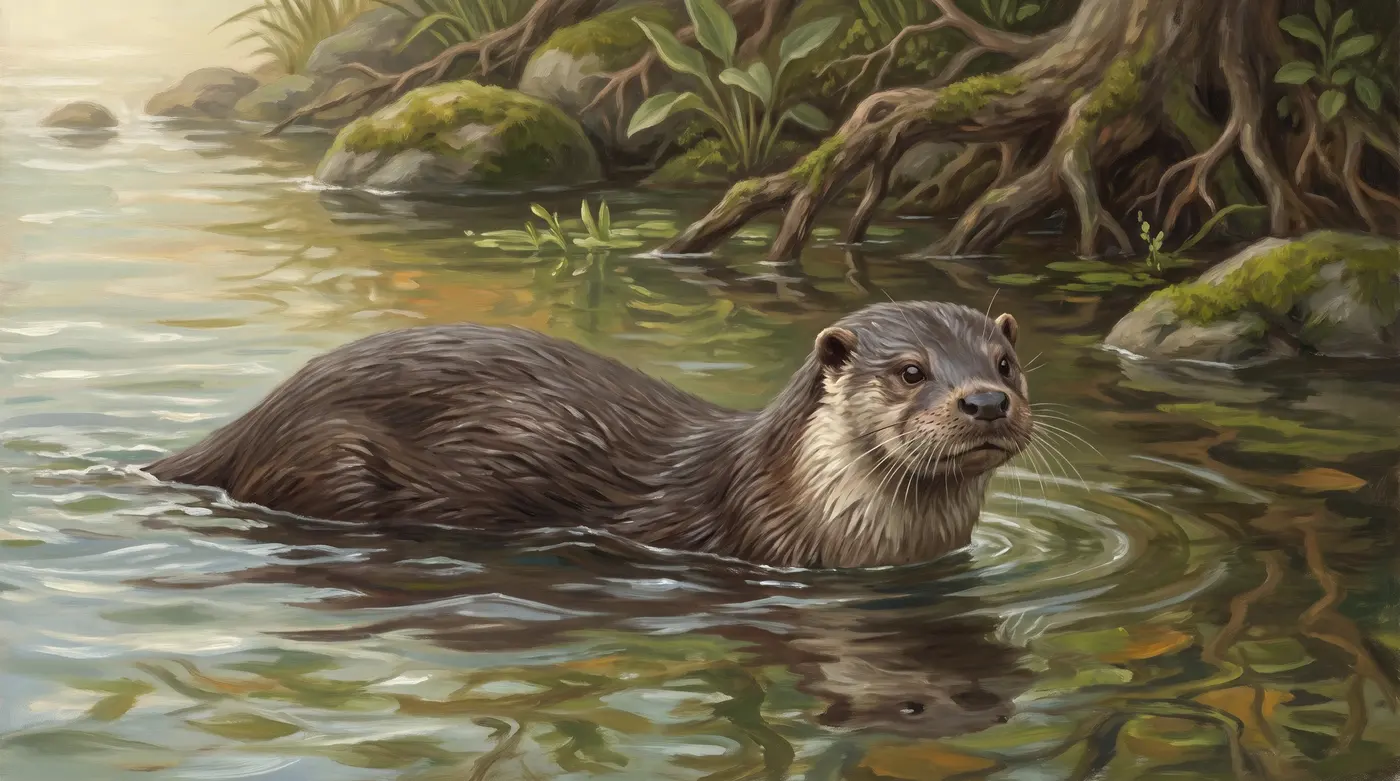
- Status: Threatened
- Rivers and lakes of Europe, Asia, and North Africa, in areas untouched by human activity
Numbers
- Weight
- 18 lbfrom 11 to 31 lb
- Length
- 4 ftmaximum value, including tail
- Lifespan
- 10 yearsfrom 8 to 12 years in the wild
- Gestation
- 9 weekstwo to four pups per birth
- Italian population
- 660 individuals2006 estimate, between 220 and 660
- Sexual maturity
- 3 yearsreached just before the third year
Ten fun facts
it lives only in areas untouched by humans and is very sensitive to pollution, so its presence means clean water.
in 2006 there were between two hundred twenty and six hundred sixty otters in Italy, but today their numbers are growing.
in December 2022 proof of the otter's return to Veneto came from droppings found along the Digon stream.
among fish the otter prefers eels and trout, but it also catches shrimp, waterfowl, voles, and rabbits.
when food is scarce, the otter leaves rivers and travels all the way to coastal areas in search of prey.
for its den the otter almost always uses holes carved into riverbanks by the current, rather than digging burrows.
it avoids burrows abandoned by badgers and foxes, probably because they have already been inhabited by other animals.
its range extends from the Iberian Peninsula to Japan and also includes Morocco, Tunisia, and Algeria.
in the Netherlands, Liechtenstein, and Switzerland the otter is considered extinct, while in Sweden its populations are increasing.
pups are born with their eyes closed after nine weeks of gestation and stay with their mother for a long time.
The quiz answers
The first one is the question printed in your book: here is the answer. The other four are extra.
Question 1 of 5★ this one is in your book
What does the Eurasian otter mainly eat?
Question 2 of 5
Why is the presence of the otter a good sign for a river?
Question 3 of 5
How long can an adult otter grow, including its tail?
Question 4 of 5
Where does it make its den?
Question 5 of 5
In what year was the otter declared endangered in Italy?
Try it yourself
Unroll a tape measure to four feet on the floor. That is the length of an adult otter including its tail. Compare it with your height.
Count nine weeks on a calendar starting from today. That is how long an otter gestation lasts, after which two to four pups are born.
Look up the Sele, Agri, Sinni, and Basento rivers on a map of Italy. These are some of the waterways where the otter still lives.
Data from Wikidata (Q29995) and Wikipedia (Eurasian otter).