
Animals · Woods and fields of North America
Pileated woodpecker
Dryocopus pileatus
The woodpecker that carves rectangles
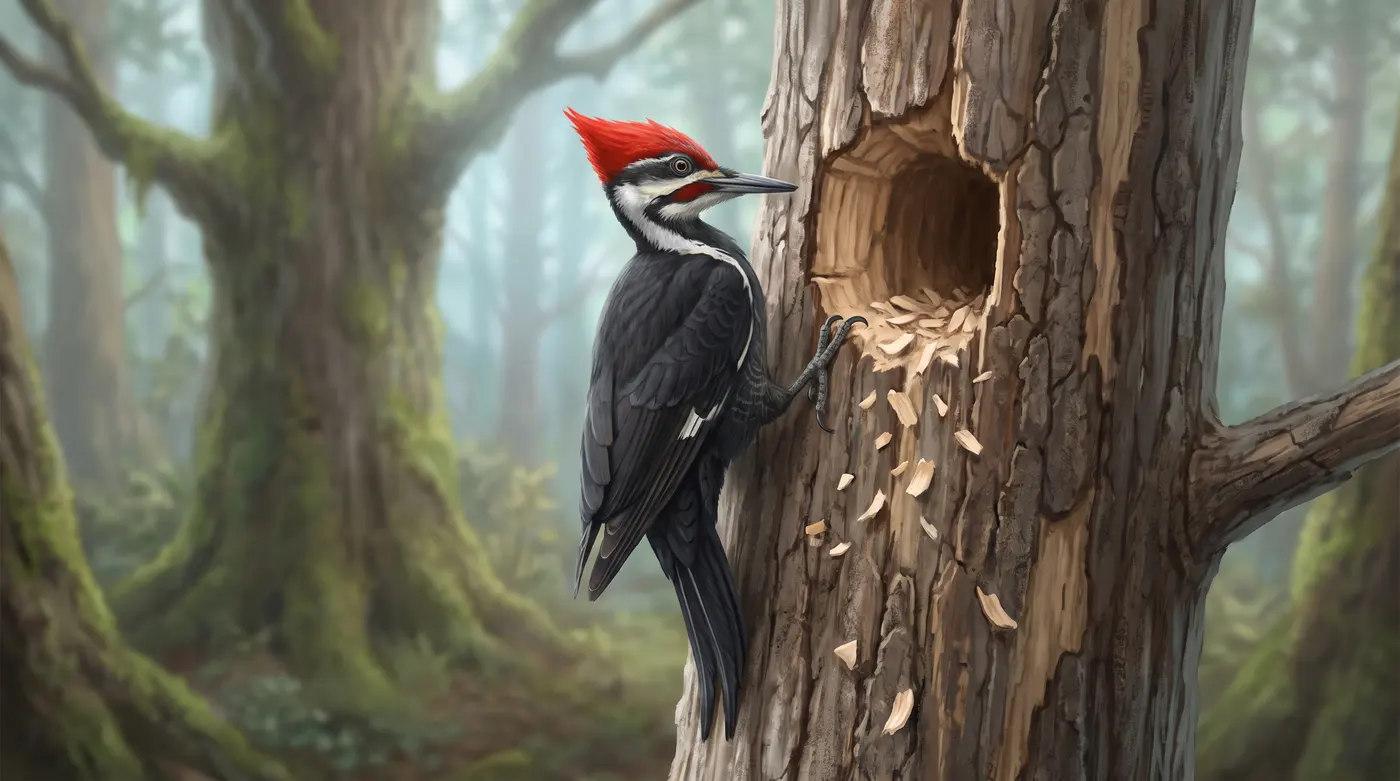
- Status: Safe
- Mature forests of Canada and the eastern and northwestern United States
Numbers
- Weight
- 10 ozfrom 8 to 14 oz
- Length
- 18 infrom 16 to 19 in
- Wingspan
- 30 infrom 26 to 30 in
- Nest height
- 15 ftin a nest box; usually higher in dead trees
- Average weight
- 9,8 ozmales 11 oz, females 9 oz
Ten fun facts
this woodpecker carves rectangular holes, not round ones, because it is opening an ant tunnel lengthwise.
its tongue is long enough to reach into cracks the beak cannot enter, and sticky enough to lift ants out.
it drums on hollow wood on purpose, because dead trunks carry the sound much further.
the red line from bill to throat belongs to the male; on the female that same line is black.
the nest holes it abandons become homes for owls, ducks and squirrels that cannot dig their own.
it is the size of a crow, which makes it one of the largest woodpeckers in North America.
carpenter ants and the larvae of wood-boring beetles make up almost everything this bird eats.
young birds have straighter crests than the adults do, which birdwatchers sometimes call their mohawk stage.
Woody Woodpecker was drawn from this bird, though the famous laugh was borrowed from another species.
a bird in the south has darker feathers and is smaller than one of the same species in the north.
The quiz answers
The first one is the question printed in your book: here is the answer. The other four are extra.
Question 1 of 5★ this one is in your book
What shape are the holes this woodpecker cuts?
Question 2 of 5
Why does it drum on hollow dead trees?
Question 3 of 5
What does it mostly eat?
Question 4 of 5
How can you tell a male from a female?
Question 5 of 5
What happens to the nest holes it abandons?
Try it yourself
Knock once on a solid door and once on an empty cardboard box. The difference is why this woodpecker chooses hollow dead wood to drum on.
Draw a rectangle six inches tall on paper: that is the size of a hole this bird cuts into a living trunk in a single session.
Measure thirty inches with a tape and hold your arms that far apart. That is the wingspan of a bird you could hold in one hand.
Data from Wikidata (Q930712) and Wikipedia (Pileated woodpecker).