
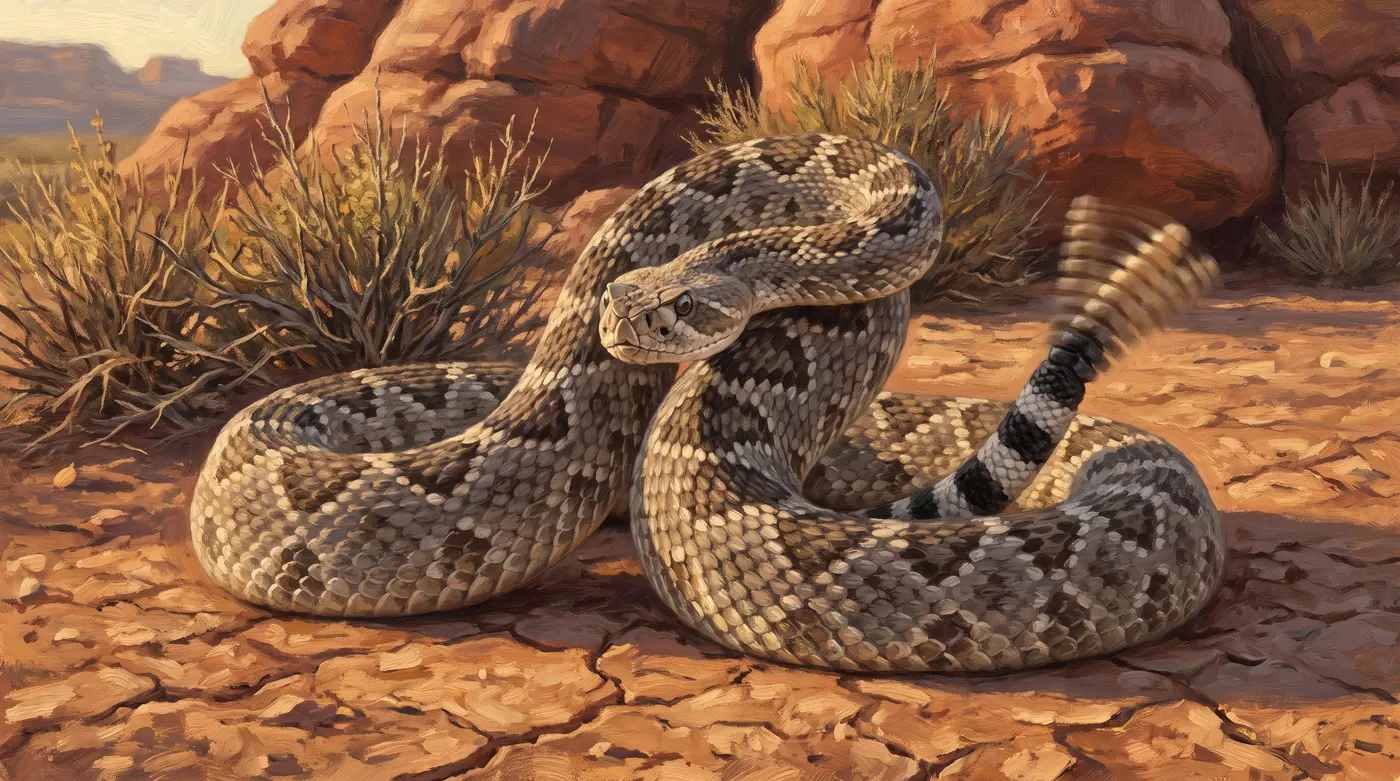
- Status: Safe
- Deserts of the southwestern United States and northeastern Mexico
Numbers
- Weight
- 15 lblarge adult specimens
- Length
- 67 infrom 48 to 84 in
- Lifespan
- 22 yearsfrom 20 to 25 years, usually less in the wild
- Maximum length
- 7 ftthe second largest rattlesnake in the world
- Fasting
- 3 weeksone meal every 2 to 3 weeks
- Fangs regrown
- 4 times per yearhollow and retractable venomous fangs
Ten fun facts
with a length ranging from four to seven feet, this is the second largest rattlesnake species in the entire world.
its venomous fangs are hollow and retractable, folding back when the mouth closes and standing up when it opens wide.
sometimes fangs remain stuck in prey, but the snake can grow a brand new set up to four times each year.
the noise maker on its tail is called a crepitaculum, and it is used strictly as a warning signal, not for hunting.
snakes living near cities seem to rattle less often, likely to avoid being spotted and killed by nearby human beings.
its hemotoxic venom breaks down tissue and organs while completely destroying the ability of the blood to form clots.
the snake controls venom dosage, injecting a large amount while hunting but little or none during a defensive warning bite.
eating just once every two or three weeks is enough, and its diet includes rodents, birds, amphibians, and other reptiles.
babies are born with fully functioning venom glands and leave their mother just a few hours after being born into the world.
in 2009, an escaped pet Rattlesnake was captured inside a pine forest near Ostia in central Italy.
The quiz answers
The first one is the question printed in your book: here is the answer. The other four are extra.
Question 1 of 5★ this one is in your book
What is the sound-producing structure at the end of the tail called?
Question 2 of 5
How often does a Rattlesnake need to eat?
Question 3 of 5
What happens to the venomous fangs when the snake closes its mouth?
Question 4 of 5
Are newborn baby snakes dangerous?
Question 5 of 5
What type of venom does this species have?
Try it yourself
Unroll four feet of string and then seven feet. These measurements show the minimum and maximum lengths of an adult Rattlesnake.
Mark a meal on your calendar once every three weeks for two months. That is how often this snake needs to eat.
Measure twelve inches on a ruler. This is the exact length of newborn snakes that begin hunting alone just hours after birth.
Data from Wikidata (Q222287) and Wikipedia (Western diamondback rattlesnake).