
Animals · Woods and fields of North America
Red fox
Vulpes vulpes
The carnivore with the widest global range
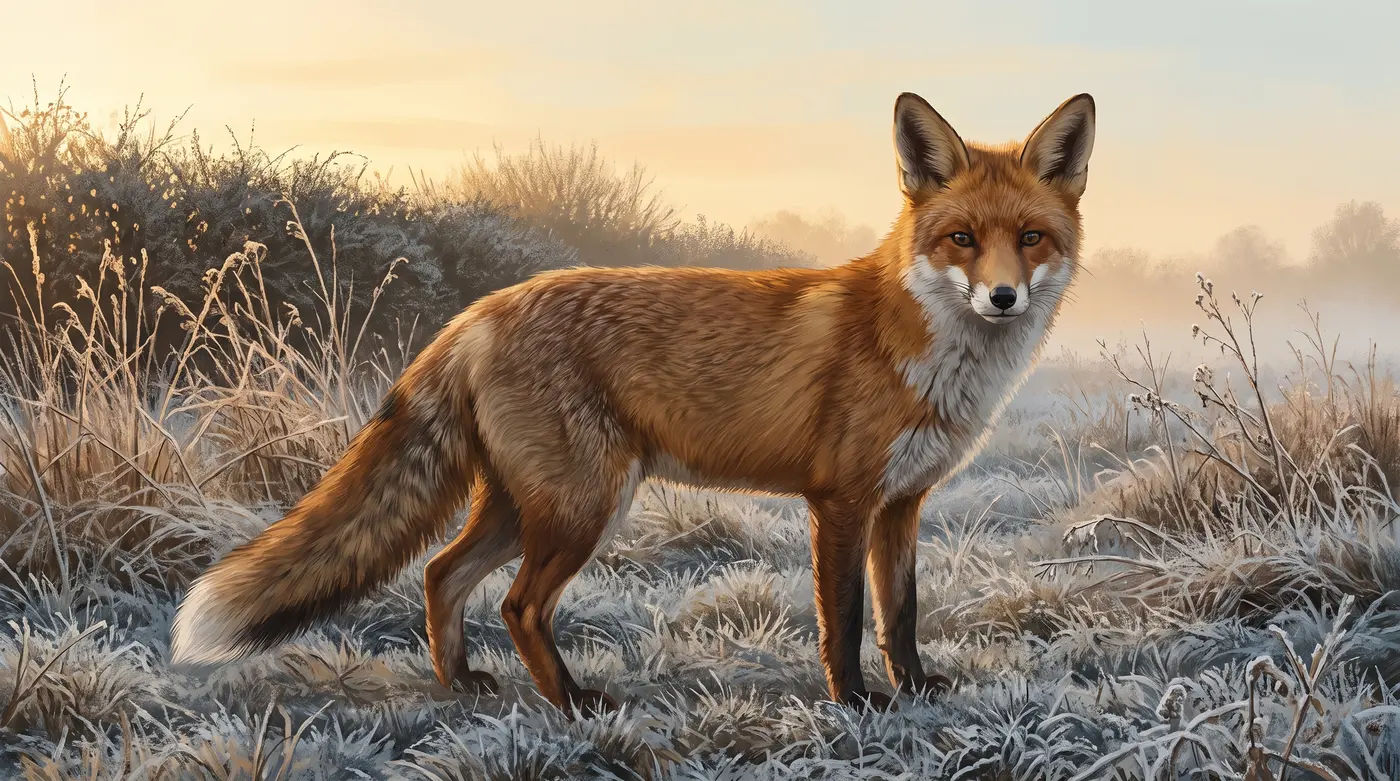
- Status: Safe
- Woods and countryside across the northern hemisphere
Numbers
- Weight
- 15 lbfrom 7 to 33 lb depending on the subspecies
- Length
- 40 infrom 30 to 55 in; the source does not specify if the tail is included
- Lifespan
- 12 yearsmaximum age observed in the wild
- Distance in one year
- 200 mimovement of a single individual
- Territory
- 20 sq midrops to 5 sq mi where food is plentiful
- Food per day
- 2 lbfrom 1 to 2 lb
Ten fun facts
it is the carnivore with the widest range in the world and lives across the northern hemisphere, except for major deserts.
it hunts prey of all sizes, from insects a quarter inch long to birds with a five foot wingspan.
it has a small stomach for its size and eats only half of what a dog or wolf of equal size would swallow.
it buries its food reserves in dozens of holes two to four inches deep instead of gathering them in a single place.
glands near its tail produce thiols and thioacetates, the same scent chemicals as skunks, but in much smaller quantities.
it recognizes another individual by scent and can even figure out its social rank and standing in the group.
its territory can span twenty square miles, but it drops to five square miles where food is easy to find.
it often moves into burrows dug by badgers or rabbits, even though badgers are major enemies that eat fox kits.
mothers give birth near water because after delivering her litter the female is dehydrated and needs to drink right away.
after being introduced to Australia, it became one of the worst invasive species, harming local marsupials and birds.
The quiz answers
The first one is the question printed in your book: here is the answer. The other four are extra.
Question 1 of 5★ this one is in your book
What makes the red fox unique among carnivores?
Question 2 of 5
How does it pinpoint small mammals in tall grass?
Question 3 of 5
Why does it hide food in many different holes?
Question 4 of 5
How many kits are born in an average litter?
Question 5 of 5
Which animal provides burrows for the red fox while also being its enemy?
Try it yourself
Dig five holes three inches deep in your garden, hide a hazelnut in each one, and try to find them the next day without any markers.
Blindfold yourself and ask a friend to drop a bean on the floor. Try to point to the exact spot using only your sense of hearing.
Draw a circle covering twenty square miles on a local map. That is the maximum territory size for a single red fox.
Data from Wikidata (Q8332) and Wikipedia (Red fox).