
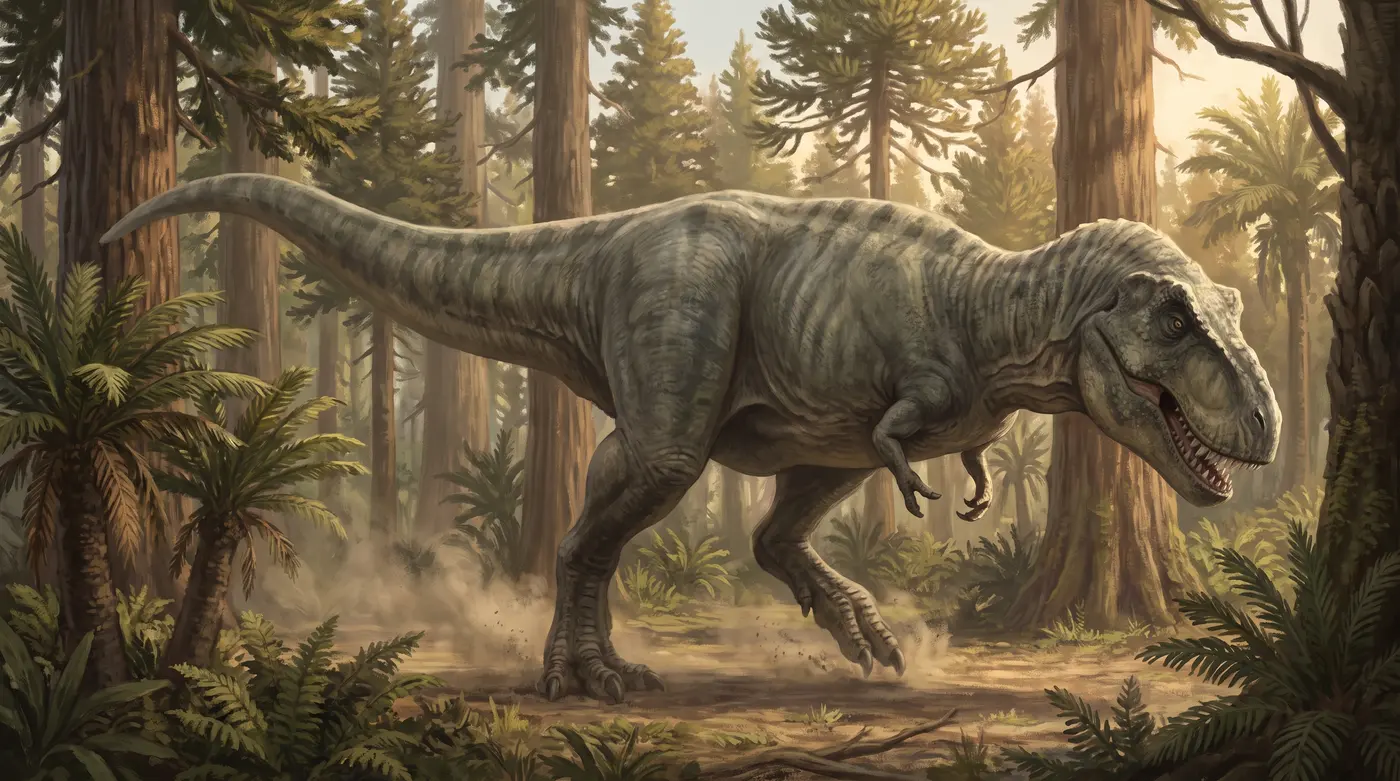
- Status: Extinct
- Fossils in western North America, ancient Laramidia
- Extinct
Numbers
- Weight
- 6,7 tonmost recent estimates for the specimen Sue; the same specimen was initially estimated up to 9.3 tons, and other specimens like Scotty reach 9.75 tons
- Length
- 40 ftskeleton of the specimen Sue, the most complete ever found; Wikidata indicates 39 feet, Scotty exceeds 43 feet and a fragmentary fossil nicknamed C. Rex suggests up to 46 feet for some specimens
- Height
- 13 ftheight at the hips of Sue's skeleton; Wikidata indicates 12 feet
- Lifespan
- 72 million years agoLate Cretaceous: the genus is documented between about 72 and 65 million years ago
- Forza del morso
- 14400 lb2019 estimate, about 7.2 tons; previous studies indicated 8,000-11,900 lb, others speculate up to 43,800 lb
- Lunghezza dei denti
- 12 inincluding root; the largest teeth known among carnivorous dinosaurs
- Impronta fossile
- 48 infound on the border between British Columbia and Alberta, alongside prints from at least two other specimens; other known prints measure between 16 and 42 inches
Ten fun facts
the fossil nicknamed Scotty, discovered in 1991, is considered the most massive and oldest Tyrannosaurus ever identified, living about thirty years.
blood vessels and bone tissue typical of female birds about to lay eggs were found inside the femur of a specimen nicknamed B-rex.
until 1989 no one knew the true shape of its arms, so the first mounted skeletons used limbs borrowed from an Allosaurus.
its arms could only bend between forty and forty-five degrees at the elbow and shoulder, too little to bring food to its mouth.
its fossil footprints usually measure between sixteen and forty-two inches, but an exceptional one measures forty-eight inches across.
its largest teeth reached about twelve inches including the root, making them the longest teeth known among all carnivorous dinosaurs.
a Tyrannosaurus bite reached an estimated force of sixty-four thousand newtons, about four times that of a modern saltwater crocodile.
in 2022 researchers proposed dividing Tyrannosaurus rex into three different species, an idea that remains a subject of debate among experts.
skin impressions from a specimen nicknamed Wyrex show skin covered in scales, with no trace of feathers or bristles at all.
many of its bones, including those in the skull, were hollow or contained air cavities, an adaptation that lightened its skeleton.
The quiz answers
Five questions about this animal. Pick an answer and find out if it is the right one.
Question 1 of 5
In which period did Tyrannosaurus live?
Question 2 of 5
How many fingers did its short front arms have?
Question 3 of 5
How powerful was its bite according to recent estimates?
Question 4 of 5
What do the skin impressions of the Wyrex specimen suggest?
Question 5 of 5
Which is the only specimen whose sex is known for certain?
Try it yourself
Using a protractor, bend your elbow to a forty-five degree angle: this is about the maximum movement that the short arms of Tyrannosaurus could make.
Cut a twelve-inch strip out of cardboard: this is how long the largest teeth of Tyrannosaurus could be, including their full root.
Use a tape measure to mark forty feet along a hallway or in your yard: this is the approximate length of the most complete skeleton ever found.
Data from Wikidata (Q14332) and Wikipedia (Tyrannosaurus).