
Animals · Woods and fields of North America
White-tailed deer
Odocoileus virginianus
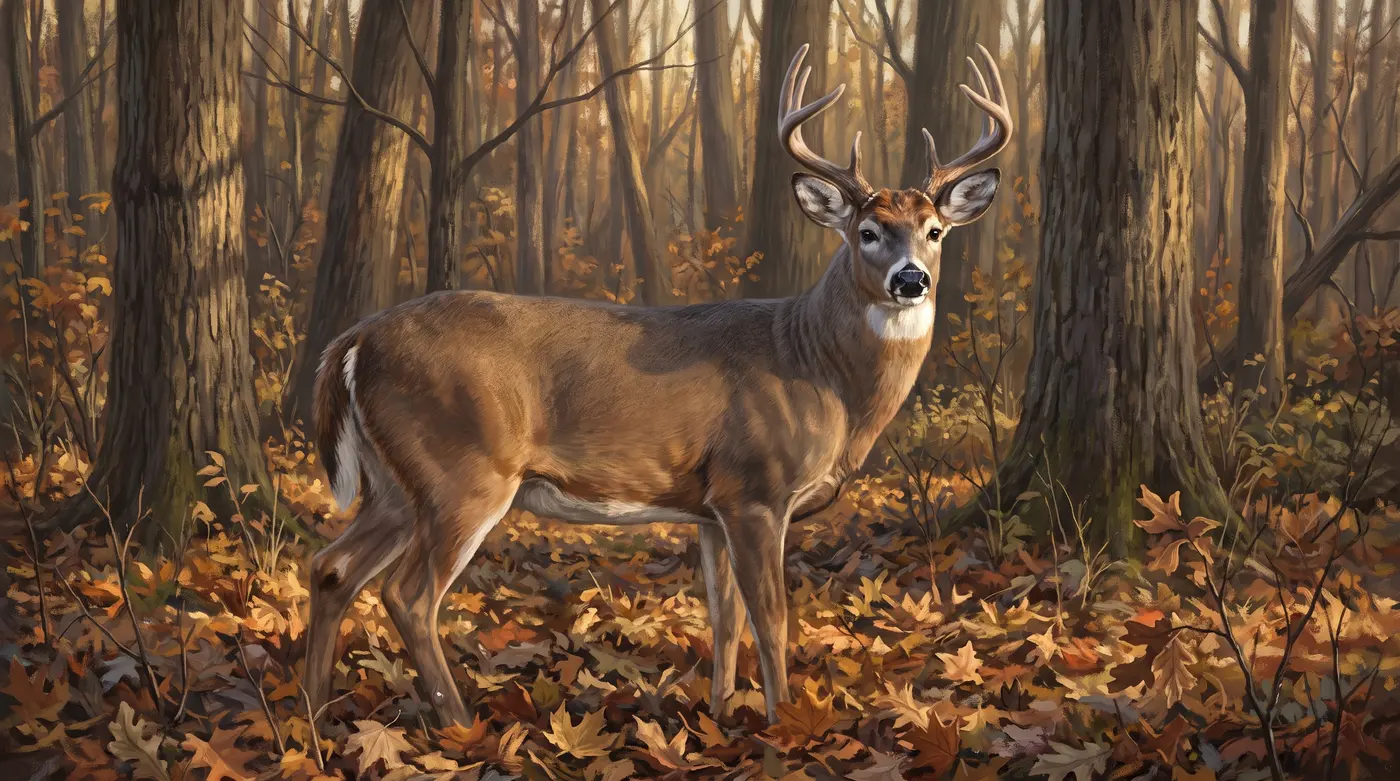
It builds new weapons every year
- Status: Safe
- Woods, farmland and suburbs from southern Canada to South America
Numbers
- Weight
- 150 lbaverage adult male; females 88 to 198 lb
- Length
- 70 infrom 37 to 87 in, tail included
- Height
- 36 inat the shoulder, from 21 to 47 in
- Heaviest recorded
- 511 lbestimated live weight, Minnesota
- Deer in Texas
- 5300000 wild and farmed herds together
- Fawn by first winter
- 44 lbfrom 44 to 77 lb
Ten fun facts
a buck grows a whole new set of antlers every year, out of nothing, and drops them each winter.
antlers are solid bone, while horns are hollow and stay on an animal for life.
growing antlers are covered in velvet, a skin so full of blood vessels that it feeds the bone.
the white underside of the tail is a signal to the predator, not to the other deer.
raising the tail tells a hunting animal it has been spotted and the ambush has failed.
how big the antlers grow depends on food first, then age, and only then on family.
about one female in every ten thousand grows a set of antlers as well, which is rare enough to make the news.
fawns are born covered in white spots and have lost every one of them before their first winter arrives.
the state of Texas alone is home to an estimated five million white-tailed deer, wild and farmed together.
the heaviest one ever recorded was estimated at over five hundred pounds when alive, in northern Minnesota.
The quiz answers
Five questions about this animal. Pick an answer and find out if it is the right one.
Question 1 of 5
What is the difference between antlers and horns?
Question 2 of 5
What is velvet on a deer?
Question 3 of 5
Who is the raised white tail a message for?
Question 4 of 5
What decides how large a buck's antlers grow?
Question 5 of 5
What happens to a fawn's spots?
Try it yourself
Measure thirty-six inches from the floor: that is the shoulder height of an adult deer, and probably close to your own waist.
Wave a white cloth as you run across a field and ask someone to watch. That flash is exactly what a deer's tail is telling a predator.
Look up how much you weighed at birth and compare it with a fawn's forty-four pounds at its first winter.
Data from Wikidata (Q215887) and Wikipedia (White-tailed deer).