
Space · Galaxies and the universe
The Andromeda Galaxy
The farthest thing your eyes can see
You can see it with your eyes
The numbers
- Distance
- 2,538,000light-years
- What kind it is
- A barred spiralLike the Milky Way
- A record
- The closest big galaxy to usAnd you can see it with the naked eye
- First written description
- In 964, as a small cloud
To get an idea
Its light took more than two and a half million years to get here.
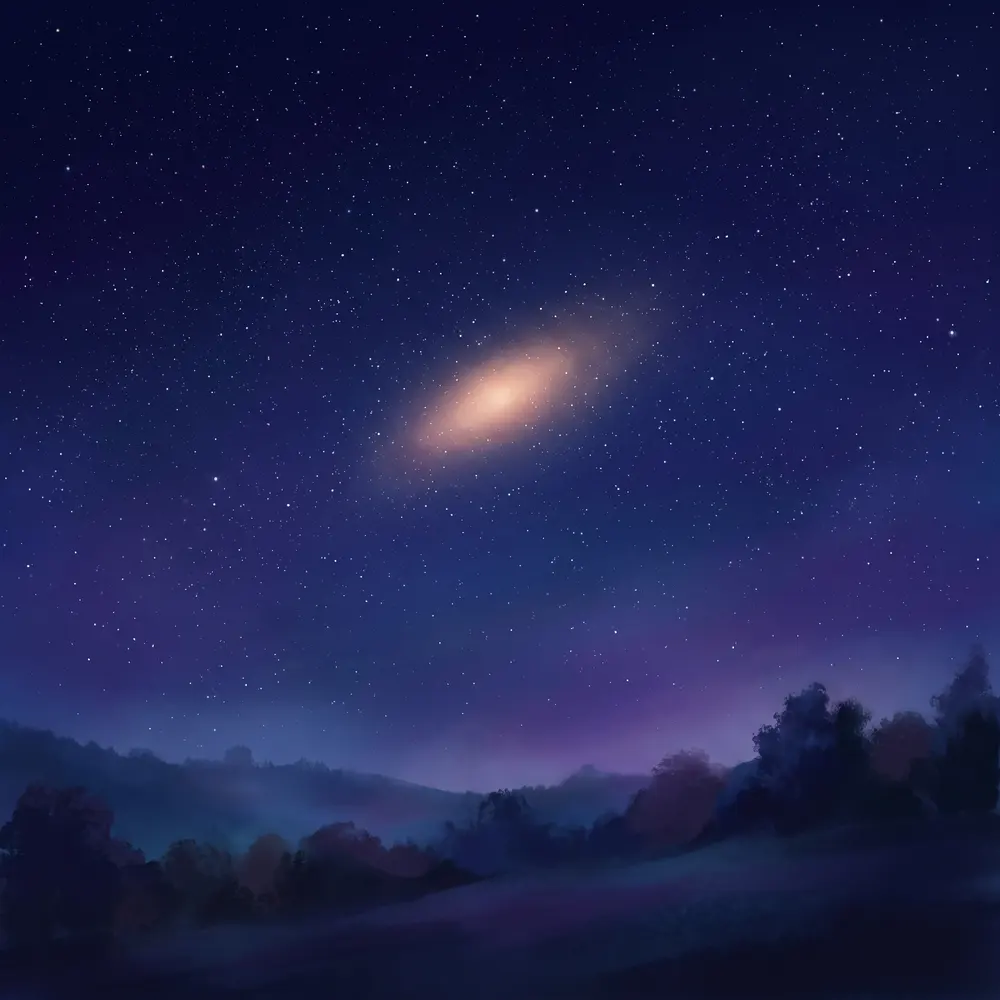
To the naked eye it is not a spiral: it is a pale little smudge, just as the first person to see it described it.
Fun facts
These are not in the book: there was no room on paper.
It used to be called the Great Andromeda Nebula, before people understood it was a galaxy.
It is also known by the catalog labels M31 and NGC 224, which astronomers use.
In the fall skies of the northern hemisphere it is one of the classic objects to look for.
It is moving toward our galaxy, and one day the two might merge.
A 2025 study puts the chance of that collision at fifty percent.
Test yourself
The first question is the one printed under the QR code, with the answer the book did not give. The other four only exist here.
Question 1 of 5★ is the one from your book
What is Andromeda?
Question 2 of 5
Can you see it with the naked eye?
Question 3 of 5
How far away is it?
Question 4 of 5
How did the first person to see it describe it?
Question 5 of 5
Will it crash into the Milky Way?
Riddles
More than a thousand years ago an astronomer wrote me down, calling me a small cloud, and he was not wrong: from the ground I still look like that. What am I?
I look a lot like the home you live in, and I am coming toward you. A very long time from now we might become one, but it is not certain. What am I?
Try it yourself
Look at it out of the corner of your eye instead of straight on: faint objects are easier to see with side vision than by staring at them.
With binoculars it becomes a glowing oval with a brighter center. Do not expect the spiral arms: only a long exposure shows those.
The words
- long exposure
- A photograph that collects light for a long time, showing what the eye cannot see.
Sources: Wikidata (Q2469), Wikipedia (Galassia di Andromeda).