
Animals · Ice: the Arctic and Antarctica
Arctic fox
Vulpes lagopus
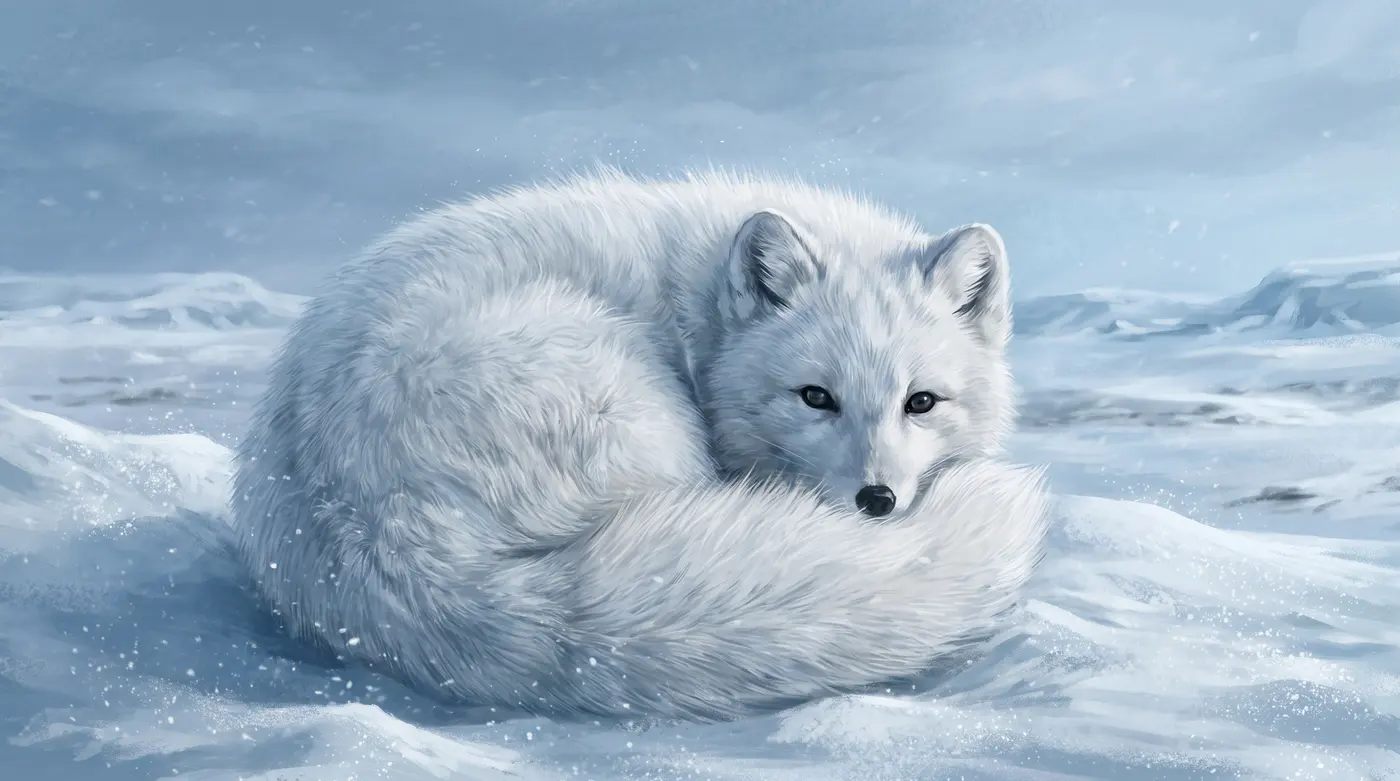
A coat that changes with the seasons
- Status: Safe
- Tundra and Arctic coasts of Eurasia, North America, Greenland, and Iceland
Numbers
- Weight
- 10 lbfrom 9 to 11 lb
- Length
- 21 infrom 21 to 22 inches; the material does not specify if the tail is included
- Lifespan
- 4 yearsfrom 3 to 6 years in the wild
- Litter size
- 19 pupsthe highest number known in the order Carnivora
- Cold tolerance
- null degreesthe popular science value of fifty degrees below zero does not appear in the material
- Movement on ice
- null milong crossings on sea ice are not documented in the material
Ten fun facts
in years of plenty, it can give birth to up to nineteen pups, the highest number known among all carnivores.
the Arctic fox population rises and crashes in direct rhythm with the boom and bust cycle of tundra lemmings.
it changes color twice a year, wearing a thick white coat in winter and a brownish coat during summer months.
between April and May, it actively hunts ringed seal pups, which remain helpless on top of the open snow.
for a long time it was the only species in the genus Alopex, before evolutionary science moved it into Vulpes.
its ears are small and rounded because having less exposed surface area reduces heat loss in the freezing Arctic cold.
the species remains severely endangered in Scandinavia and Finland, despite receiving decades of strict legal protection from hunting.
the red fox is expanding its range toward the north, putting it in direct competition with the Arctic fox.
it lives in Iceland, Svalbard, and the Lapland hills of Finland, as well as across the vast continental tundra.
the scientific name lagopus means hare foot, referring to the dense fur that covers the soles of its paws.
The quiz answers
Five questions about this animal. Pick an answer and find out if it is the right one.
Question 1 of 5
What color is the coat of the Arctic fox in winter?
Question 2 of 5
What is its main source of food?
Question 3 of 5
How many pups can it have in a year of plenty?
Question 4 of 5
In which environment does it live?
Question 5 of 5
Which species competes with it by expanding north?
Try it yourself
Place a white paper on a white table and a brown paper on soil in a pot to see how blending in helps this fox hide from danger.
Count nineteen dried beans and line them up to visualize the largest litter size ever recorded among all the meat-eating mammals on our planet.
Weigh your school backpack when it is filled with books, because if it reaches eleven pounds, you are holding the exact weight of an adult fox.
Data from Wikidata (Q82738) and Wikipedia (Arctic fox).