
Animals · Farm and household friends
Chicken
Gallus gallus domesticus
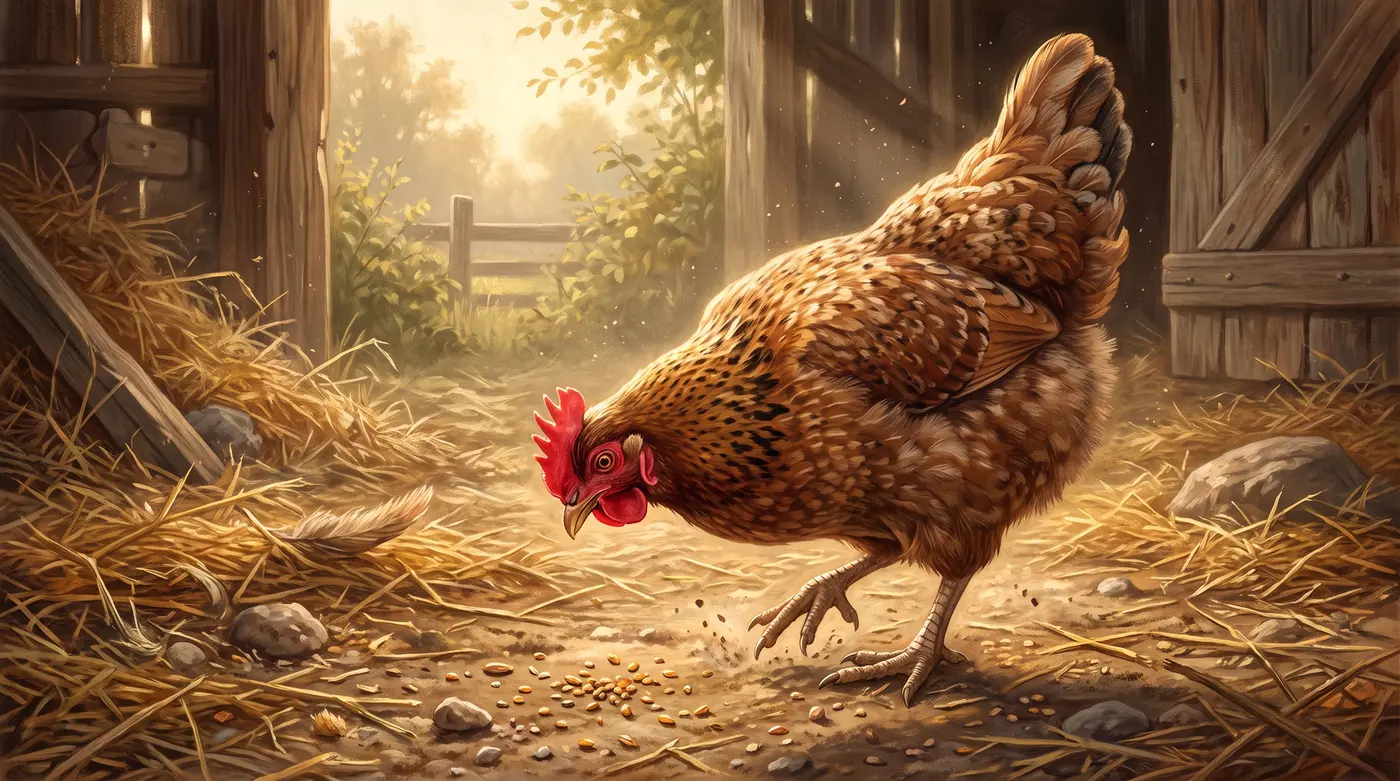
Digesting food with pebbles and grit
- Status: Safe
- Chicken coops and farmyards around the world, raised by humans
Numbers
- Weight
- 3,3 lbweight indicated at maturity; varies greatly between bantam, light, and giant breeds
- Length
- 16 infrom 14 to 20 inches
- Lifespan
- 9 yearsfrom 5 to 13 years depending on the breed; value chosen at the center of the range
- Eggs per year
- 300 eggsonly in breeds selected for egg laying
- Record longevity
- 16 yearsrecord recognized by Guinness World Records
- Live individuals worldwide
- 23 billionno other farmed animal reaches these numbers
Ten fun facts
it has no teeth and swallows small stones and sand that stay in its stomach to grind up its food instead.
the minerals it pecks from the ground help make the shells of the eggs it will lay much stronger.
it is an omnivore that eats seeds and insects, but can also catch earthworms, small lizards, and little snakes.
there is a strict pecking order in a flock that decides which bird gets access to food and nests first.
if one bird is removed from the flock, the entire social hierarchy breaks down until everyone reorganizes.
it prefers laying eggs in nests that already contain eggs and will sometimes move eggs from neighboring nests into its own.
farmers use fake eggs to encourage chickens to lay their eggs in a specific location inside the coop.
brooding lasts about twenty-one days, during which time the mother hen becomes quite aggressive toward any outsiders.
it only flies short distances, just high enough to clear a fence or reach a low perching tree branch.
Pliny the Elder wrote that the rooster was so feisty that it could terrify even powerful lions.
The quiz answers
Five questions about this animal. Pick an answer and find out if it is the right one.
Question 1 of 5
How does a chicken grind its food?
Question 2 of 5
How many days does egg incubation last?
Question 3 of 5
What is a pecking order?
Question 4 of 5
How long can a chicken live in nature?
Question 5 of 5
How many eggs can a selected breed lay per year?
Try it yourself
Put a spoonful of rice into a jar with a few small pebbles and shake it to see how a stomach grinds food without teeth.
Mark twenty-one days on a calendar starting today, which is the exact amount of time it takes for a brooding egg to hatch.
Watch a group of animals or people in a line and notice who always goes first, showing how a pecking order works.
Data from Wikidata (Q780) and Wikipedia (Chicken).