
Animals · Farm and household friends
Rabbit
Oryctolagus cuniculus
One hundred million scent receptor cells
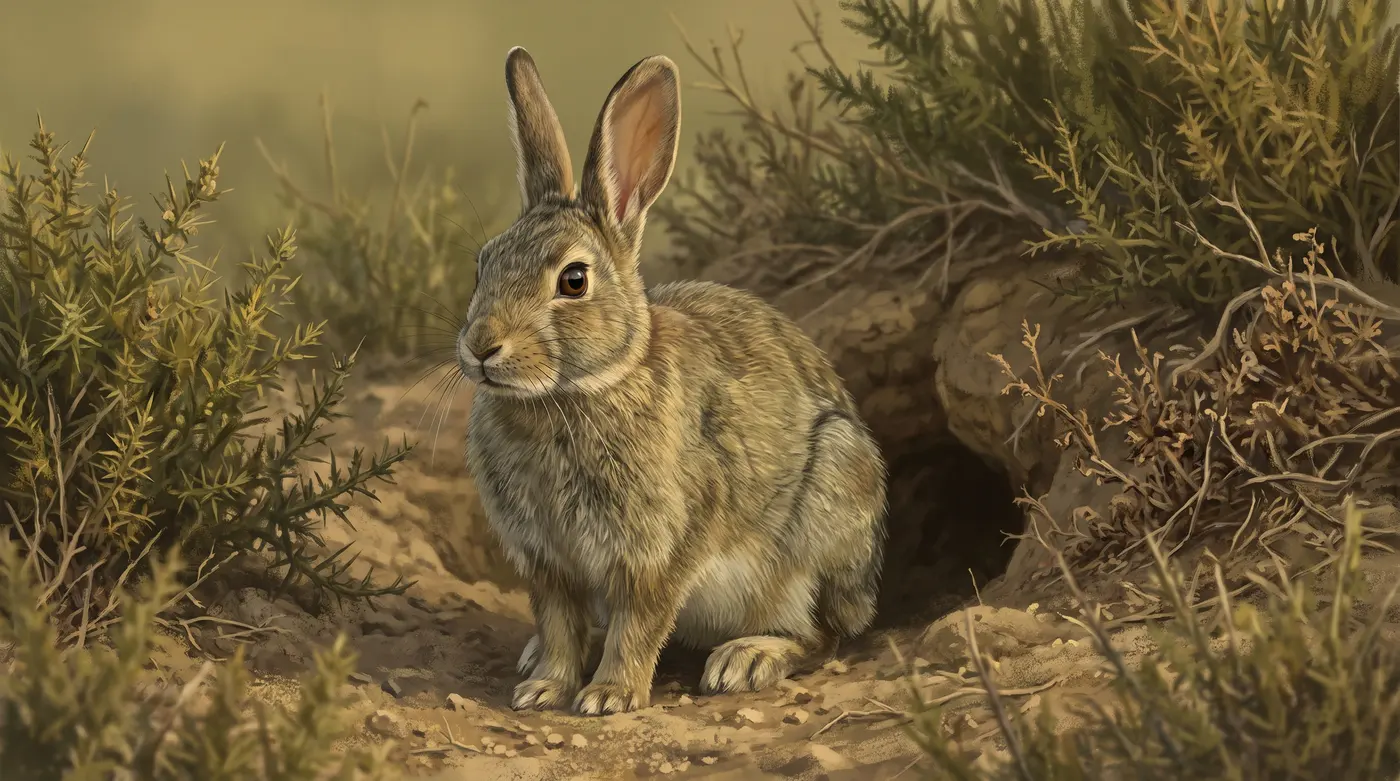
- Status: Safe
- Meadows and scrublands of Europe and North Africa, in burrows dug into the ground
Numbers
- Weight
- 5,5 lbmaximum value of the European wild rabbit, not an average; males are larger than females
- Length
- 18 inmaximum measurement of the European wild rabbit
- Lifespan
- 8,5 yearsfrom 8 to 9 years, up to 12 in captivity; 90 percent do not survive the first year
- Scent cells
- 100 milliona human has about 30 million
- Kits per litter
- 14 kitsfrom 3 to 14, after just one month of gestation
- Population in Australia
- 600 millionestimate prior to the introduction of myxomatosis, from 24 animals released in 1859
Ten fun facts
has about one hundred million scent cells, compared to the thirty million found in a human being.
its side-set eyes give it almost complete vision, but they create a blind spot directly in front of its snout.
it has thick fur under its feet instead of soft pads, which prevents it from slipping on rocks and snow.
eats part of its own droppings, called cecotropes, to recover vitamins and nutrients produced in its cecum.
has glands under its chin that produce pheromones, which it rubs on objects to mark colony territory.
a typical colony counts about ten individuals, but where food is abundant it can reach several hundreds.
ninety percent of wild individuals die before reaching one year of age due to predators and harsh conditions.
the mother visits her kits for only a few minutes each day, yet they are already fully weaned at three weeks.
among all the rabbit species in the world, it is the only one that has ever been domesticated by humans.
the Phoenicians named the Iberian Peninsula with a term meaning land of hyraxes, often translated as land of rabbits.
The quiz answers
Five questions about this animal. Pick an answer and find out if it is the right one.
Question 1 of 5
How many scent cells does a rabbit have?
Question 2 of 5
Why does the rabbit eat part of its own droppings?
Question 3 of 5
Where is the rabbit's blind spot located?
Question 4 of 5
How many kits can be born in a single litter?
Question 5 of 5
How many rabbits was the Australian population descended from?
Try it yourself
Close one eye and try to grab a pencil from the table to understand the difficulty of an animal with eyes on the sides of its head.
Look on a map of your neighborhood for an area of ten acres, which is over four hundred thousand square feet, to see a rabbit colony territory.
Start from the number twenty-four and double it each time. Count how many steps it takes to pass one million, then think about Australian rabbits.
Data from Wikidata (Q25851) and Wikipedia (European rabbit).