
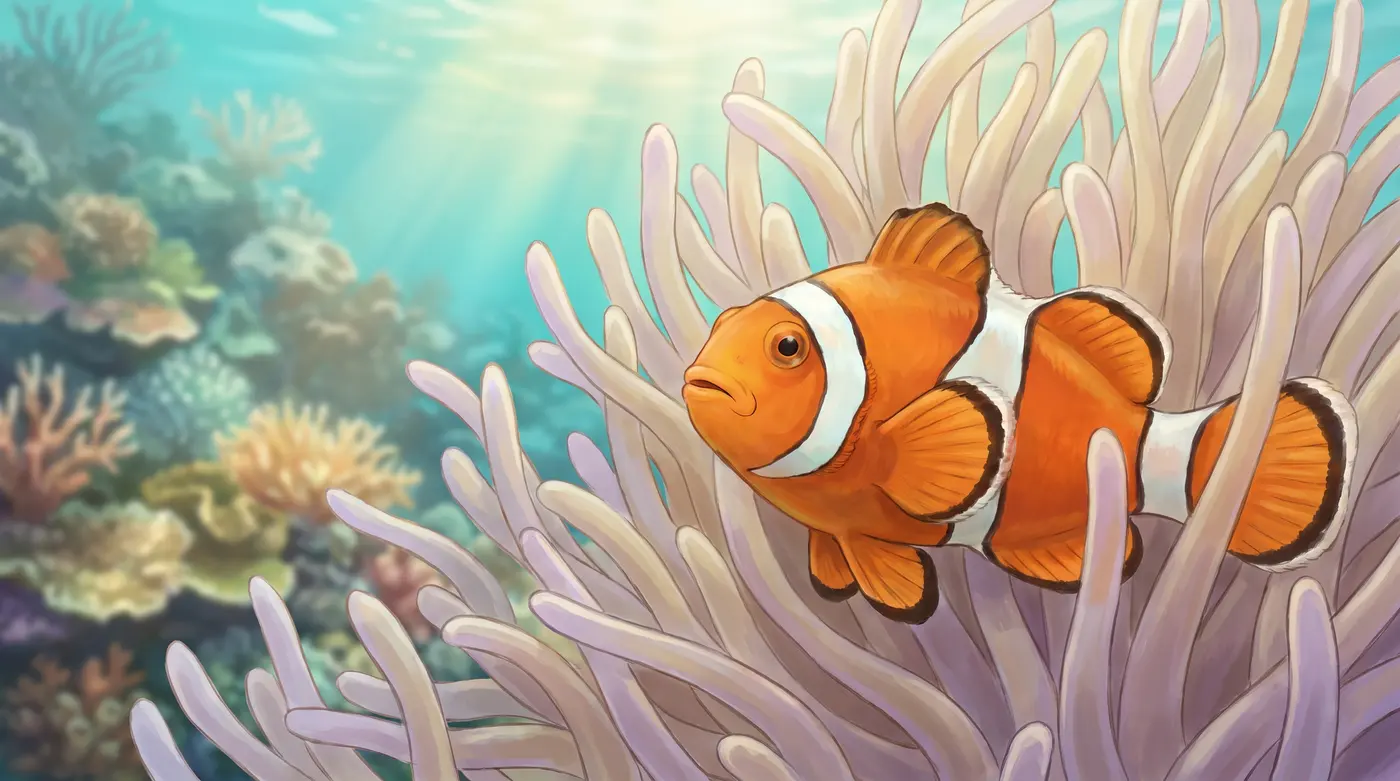
- Status: Safe
- Coral reefs of the eastern Indian Ocean and western Pacific Ocean
Numbers
- Weight
- 0,4 oz0.35 to 0.5 oz
- Length
- 3 inon average 2 to 3 in, some up to 5
- Lifespan
- 8 years6 to 10 years in the wild
- Maximum size
- 5 inexceptional specimens, average remains between 2 and 3
- Light bars
- 3 barsvertical, sometimes edged with black
- Dorsal spines
- 11 spines10 to 11, feature that separates it from the twin species
Ten fun facts
all individuals are born male, and the largest one in the group transforms into a functional female and takes charge.
the mucus covering its skin makes it immune to the venom of the anemone tentacles where it lives.
if the female of the group disappears, the largest remaining male changes sex and replaces her.
it defends its home anemone from butterflyfish, which are among the few animals capable of eating its tentacles.
it is distinguished from its twin species almost solely by counting dorsal spines, having ten or eleven instead of nine.
the first white bar passes over the forehead and joins the opposite side, leaving only the throat orange.
it mainly takes shelter in three species of sea anemones: Radianthus magnifica, Stichodactyla gigantea, and Stichodactyla mertensii.
females are larger than males, a common size difference that is also found in many other bony fish species.
in aquariums it has crossed with the eastern clownfish, and in nature a hybrid with Amphiprion sandaracinos is considered possible.
ocean warming causes anemones to bleach, which threatens the reproduction and survival of entire local populations.
The quiz answers
Five questions about this animal. Pick an answer and find out if it is the right one.
Question 1 of 5
How are all western Clownfish born?
Question 2 of 5
What protects it from the anemone poison?
Question 3 of 5
How large is an adult on average?
Question 4 of 5
What does the anemone gain from this relationship?
Question 5 of 5
What is the main threat to this species today?
Try it yourself
Measure three inches on a ruler to see the maximum average size of an adult. Now compare that length with your index finger.
Draw an orange shape and add three vertical white bars. Make the first bar pass over the forehead, just like on a real Clownfish.
Imagine your classroom as an anemone group, where only the tallest person would be female and the second tallest the only adult male.
Data from Wikidata (Q1126155) and Wikipedia (Ocellaris clownfish).