
- Status: Endangered
- Wetlands and savannas of eastern and southern Africa
Numbers
- Weight
- 8 lb7 to 9 lb
- Length
- 41 in39 to 43 in
- Height
- 40 inup to 40 in
- Lifespan
- 22 yearsup to 22 years in the wild
- Wingspan
- 6,5 ft6 to 6.5 ft
- Night roost
- 200 individualsevening and night groups
- First flight
- 100 days56 to 100 days from hatching
Ten fun facts
is one of only two cranes that can perch on branches thanks to an opposable hind toe that other cranes lost.
lacks the coiled windpipe of other cranes so its deep call sounds more like a distant cat meowing than a trumpet.
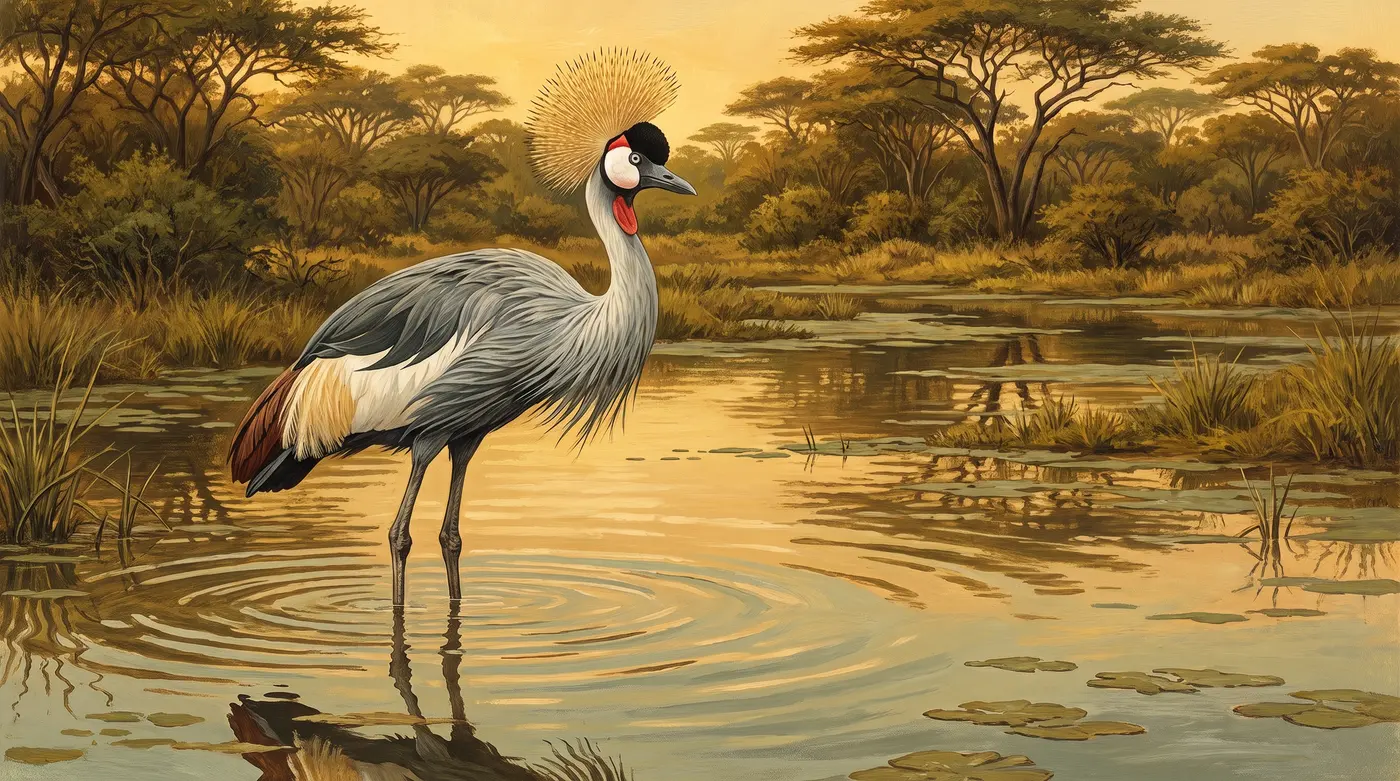
has a crown of stiff golden feathers on its head while its forehead and front crown are black and velvety.
has bare white cheeks with a red patch above them behind the eye that is larger in the eastern subspecies.
must take a running start to take flight and then flies with its neck and legs held out straight.
hunts by stomping its feet as it walks so that hidden insects flush out of the grass and get caught.
follows herds of grazing antelope and gazelles to catch any small animals that are disturbed as the herd moves along.
gathers in roosting flocks of up to two hundred individuals at night to sleep in tall river grass or trees.
chicks can walk and run as soon as they hatch and learn to fly between fifty-six and one hundred days later.
is the national bird of Uganda and appears on its flag and coat of arms as a symbol of gentle nature.
The quiz answers
Five questions about this animal. Pick an answer and find out if it is the right one.
Question 1 of 5
Which feature distinguishes crowned cranes from other cranes?
Question 2 of 5
Why is the call of the crowned crane not trumpet-like?
Question 3 of 5
How does it flush out insects while searching for food?
Question 4 of 5
Which country has this bird as its national symbol?
Question 5 of 5
What is the conservation status of the crowned crane?
Try it yourself
Walk barefoot across a grassy lawn while stomping your feet to see how many insects jump away. That is how the crowned crane hunts for food.
Lay six feet of rope on the ground to match the maximum wingspan of this crane. Now measure your own height and compare the two numbers.
Try balancing carefully on a low tree branch or a curb. Only two crane species in the entire world sleep perched up on trees like that.
Data from Wikidata (Q335992) and Wikipedia (Grey crowned crane).