
- Status: Safe
- Australia, Tasmania, and New Guinea, from deserts to mountain forests
Numbers
- Weight
- 10 lb4 to 15 lb
- Length
- 21 inmaximum body length, plus a tail of about 3.5 in
- Lifespan
- 16 years14 to 16 years in the wild
- Tongue
- 7 inextends from a very narrow mouth opening
- Spines
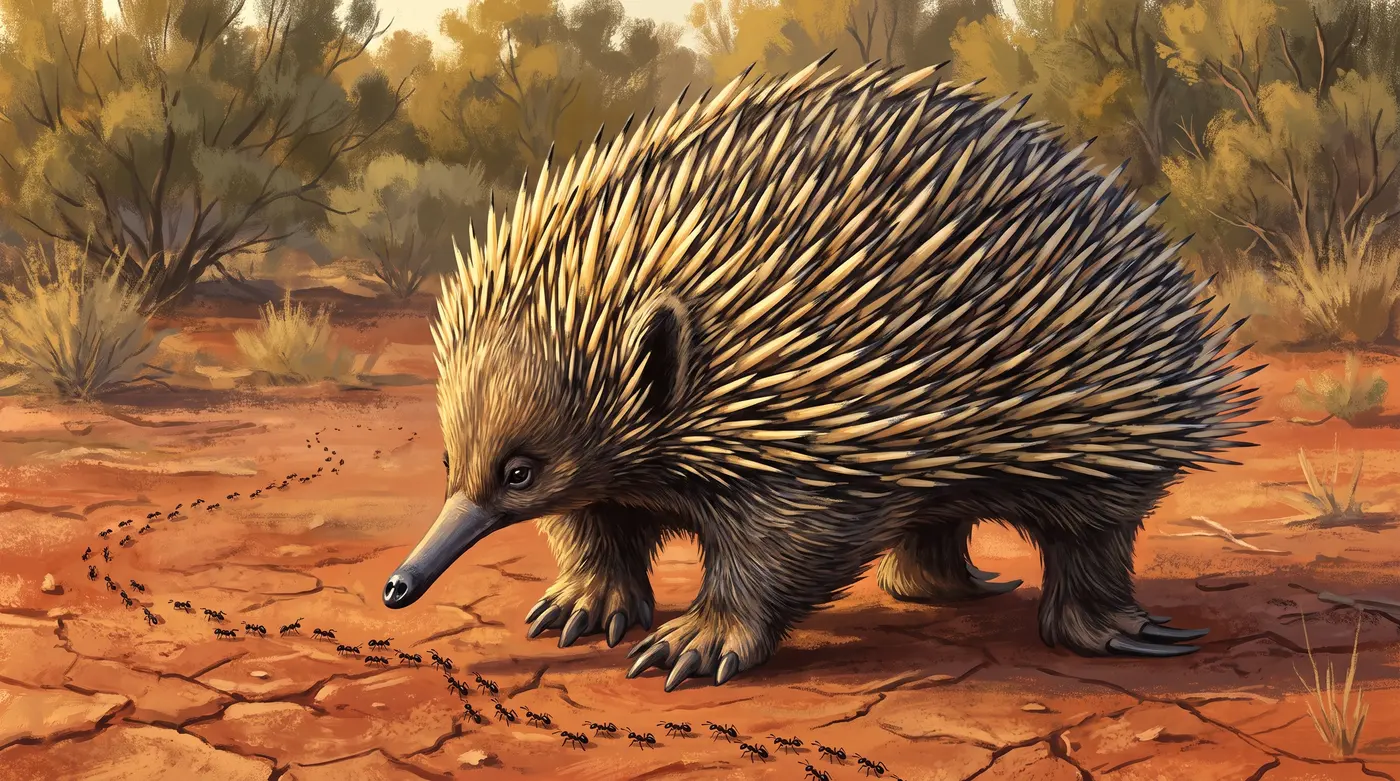
- 2,5 inyellow with black tips, on back and sides
- Egg hatching
- 10 days7 to 10 days, then another three weeks in the pouch
Ten fun facts
it is one of the rare mammals that lays eggs instead of giving birth to live young.
the tongue can extend up to seven inches, which is more than one third of its body length.
it has no teeth and crushes ants and termites using hard horny pads on its palate and tongue.
the spines are up to two and a half inches long, yellow with black tips, covering dark fur.
only male echidnas possess a sharp spur on each heel, which serves as a defensive weapon against enemies.
it does not dig burrows to live in, preferring to shelter among tree roots or inside hollow logs.
it cannot regulate its body temperature very well, so it hibernates when the weather becomes extremely cold.
the female has no nipples, so milk trickles directly from small skin pores inside her belly pouch.
the eggs hatch in seven to ten days, and then the babies remain inside the pouch for three more weeks.
Knuckles, the red video game character from the Sonic series, is based on this unusual Australian animal.
The quiz answers
Five questions about this animal. Pick an answer and find out if it is the right one.
Question 1 of 5
What makes the echidna special among mammals?
Question 2 of 5
How far can its tongue extend?
Question 3 of 5
How does it crush the insects it catches?
Question 4 of 5
Where do the newly hatched young grow?
Question 5 of 5
What does it do when the weather turns very cold?
Try it yourself
Unroll a tape measure to seven inches: that is how far an echidna can extend its long sticky tongue through a tiny mouth opening.
Cut a wooden toothpick to two and a half inches: that is the length of a single sharp spine covering the back of this animal.
Mark ten days on a calendar for egg hatching and three more weeks in the pouch: that is how long a baby stays protected inside.
Data from Wikidata (Q193182) and Wikipedia (Short-beaked echidna).