
Animals · Reptiles and amphibians
Fire salamander
Salamandra salamandra
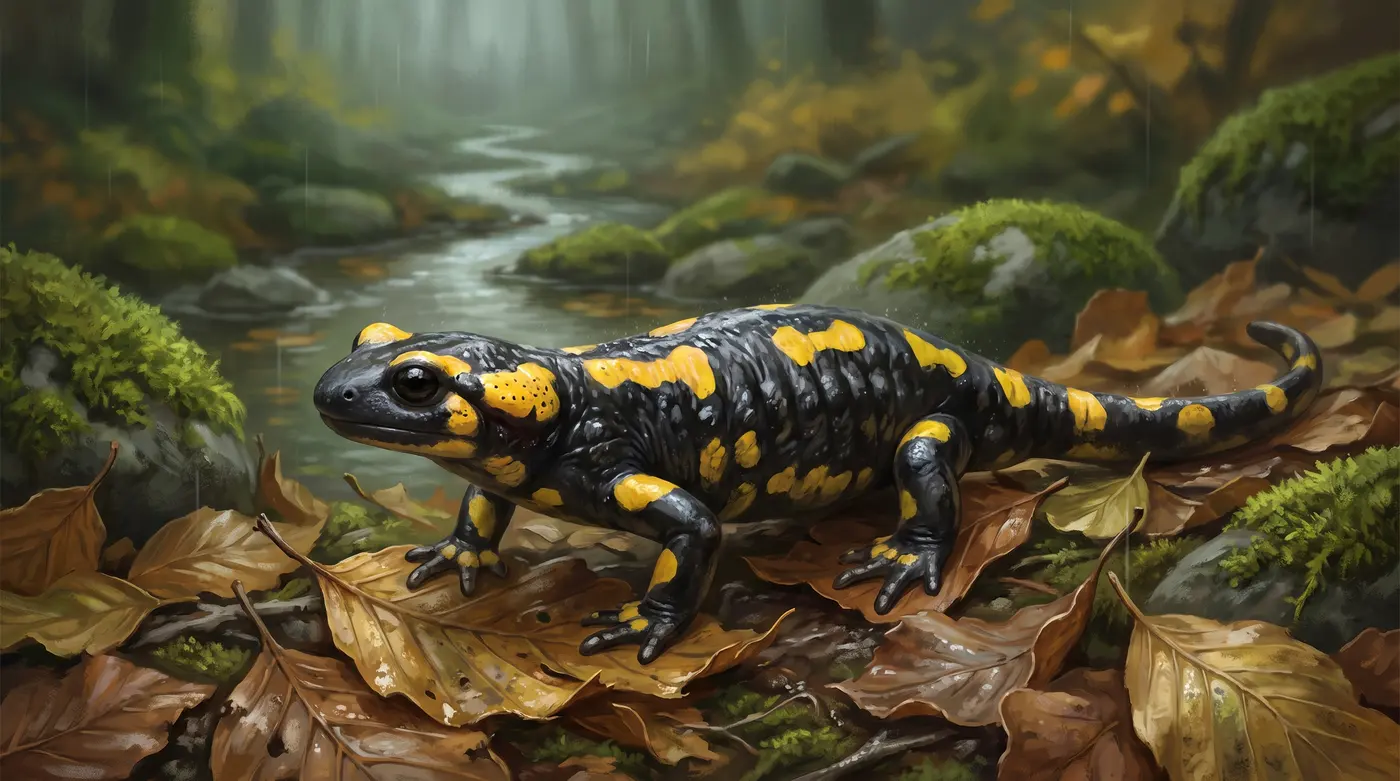
Black and yellow, a warning sign
- Status: Threatened
- Damp broadleaf forests in Europe, along small streams
Numbers
- Weight
- 1,4 ozfrom 1 to 1.8 oz
- Length
- 8 infrom 6 to 8 inches, including tail; females larger than males
- Lifespan
- 14 yearsup to 14-20 years in the wild
- European subspecies
- 14 subspeciestwo of which are present in Italy
- Wait before terrestrial life
- 6 monthsfrom 5 to 6 months in ovoviviparous mountain populations
- Record size
- 8 inmaximum total length, including tail
Ten fun facts
yellow spots do not serve as camouflage: they are a warning sign, and biologists call this warning color aposematic.
the mucus covering its skin kills bacteria, reduces water loss, and tastes terrible to predators that try to eat it.
you should never touch it with bare hands and then rub your eyes, because its skin mucus irritates delicate membranes.
females are generally longer and heavier than males, and they stay much more loyal to their hiding places than males do.
abandoned mine shafts are among its favorite daytime hiding spots, alongside rocky crevices, flat stone slabs, and old tree stumps.
in southern Europe it stays active through autumn and spring without hibernating, unlike populations living in central parts of Europe.
the male deposits a sperm packet on the ground for the female to collect, so fertilization never happens inside the water.
it does not lay eggs, giving birth instead to active larvae that already have visible gills and four well-developed limbs.
its swimming larvae can be distinguished from other young amphibians by the bright pale spots located at the base of their legs.
there are fourteen recognized subspecies across Europe, including two distinct forms that inhabit different regions of the Italian peninsula.
The quiz answers
Five questions about this animal. Pick an answer and find out if it is the right one.
Question 1 of 5
What is the purpose of the yellow spots on a fire salamander?
Question 2 of 5
What does the skin of the fire salamander produce?
Question 3 of 5
Is it true that the fire salamander can survive fire?
Question 4 of 5
What does the female give birth to?
Question 5 of 5
When is it easiest to spot a fire salamander during the day?
Try it yourself
Mark eight inches on a ruler and compare it with your forearm to see the maximum size of an adult fire salamander.
Go outside with an adult near a damp woodland right after heavy rainfall and count the amphibians you spot along the path.
Draw bright yellow spots on black paper and look at the sheet from ten feet away to see how warning coloration works.
Data from Wikidata (Q26395) and Wikipedia (Fire salamander).