
- Status: Threatened
- Deserts of the southwestern United States and northwestern Mexico
Numbers
- Weight
- 4 lb3 to 5 lb
- Length
- 20 in16 to 24 in including tail
- Lifespan
- 40 yearscan live over 40 years
- Life underground
- 90 percent of lifein burrows or hidden in rocks
- Incubation
- 5 monthseggs remain in the ground
- Hatchling length
- 6 inalready venomous right out of the egg
Ten fun facts
stores fat in its short, thick tail, a reserve that allows it to survive long periods without eating.
spends over 90 percent of its life underground or hidden in rocks, inside burrows it digs or steals.
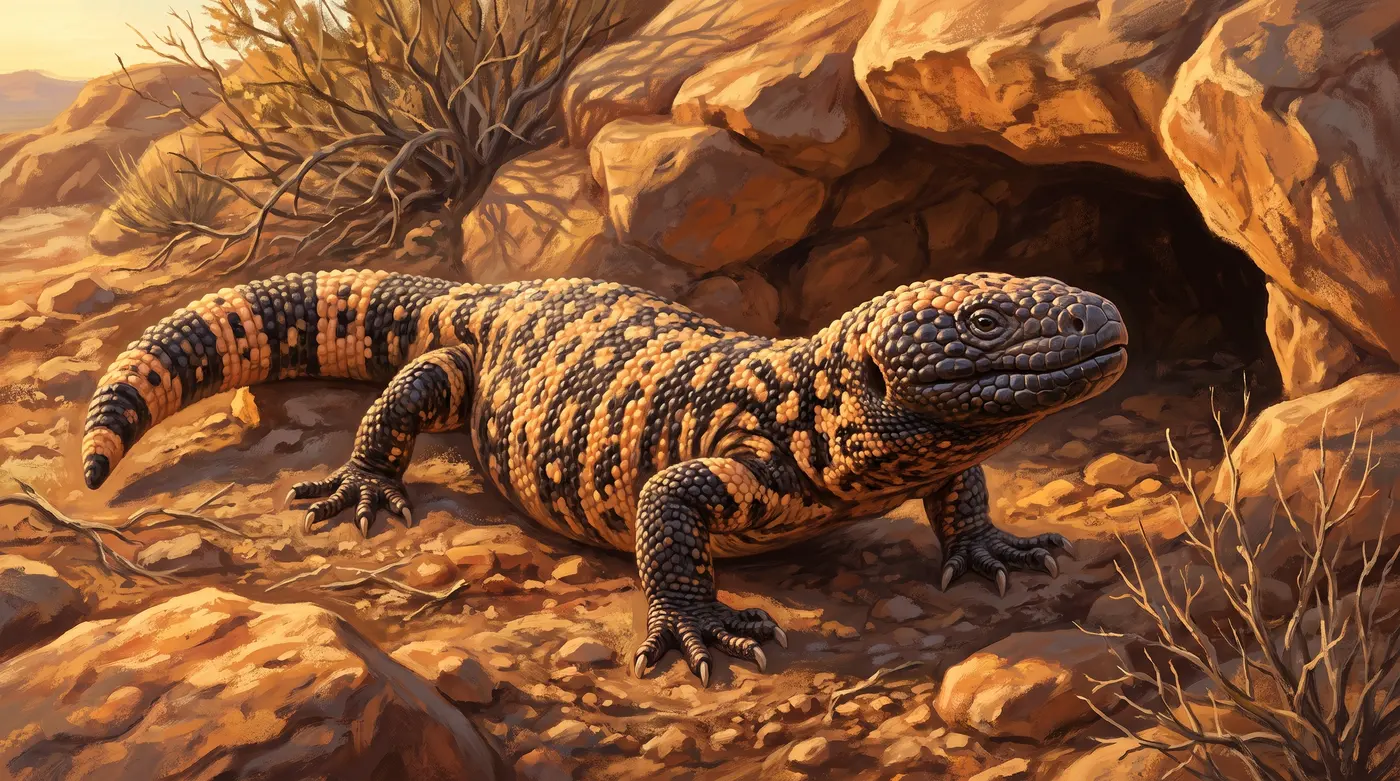
has bright warning colors, such as yellow, red, and black, which signal danger to potential predators rather than providing camouflage.
does not inject venom with hollow fangs, but lets it flow down grooves in its teeth while biting hard.
hatchlings emerge from eggs at about six inches long and are already capable of injecting venom on day one.
lays four to six eggs after spring mating, which then hatch about five months later in the soil.
inspired a type 2 diabetes drug called exenatide, which was approved by officials in two thousand five.
has tiny bony plates called osteoderms inside its scales, giving its skin a beaded appearance.
had its venom mapped by Danish researchers in two thousand fifteen, revealing new helpful proteins.
rarely inflicts a fatal bite on humans, though one documented case in Colorado caused a death.
The quiz answers
The first one is the question printed in your book: here is the answer. The other four are extra.
Question 1 of 5★ this one is in your book
How much of its life does it spend underground?
Question 2 of 5
What are its bright colors used for?
Question 3 of 5
Where are its venom glands located?
Question 4 of 5
What is stored inside its short, thick tail?
Question 5 of 5
What medicine was developed from its saliva?
Try it yourself
Mark two feet on the floor with a tape measure to see the maximum total length of a Gila monster including its thick tail.
Take a calendar and color thirty six days out of a full year to see how little time the lizard spends outside its burrow.
Use a ruler to measure six inches and compare it with your hand to see the size of a hatchling that is already venomous.
Data from Wikidata (Q207058) and Wikipedia (Gila monster).