
- Status: Safe
- Deserts of the southwestern United States and Mexico
Numbers
- Weight
- 10 oz8 to 12 ounces
- Length
- 22 in20 to 24 inches including tail
- Lifespan
- 7 years7 to 8 years in the wild
- Speed
- 20 mphon the ground, minimum value from material
- Wingspan
- 24 in18 to 24 inches in a bird that rarely flies
- Eggs per clutch
- 8 eggstwo to eight eggs incubated about twenty days
Ten fun facts
enters hypothermia during cold desert nights, lowering its body temperature to consume far less energy until morning comes.
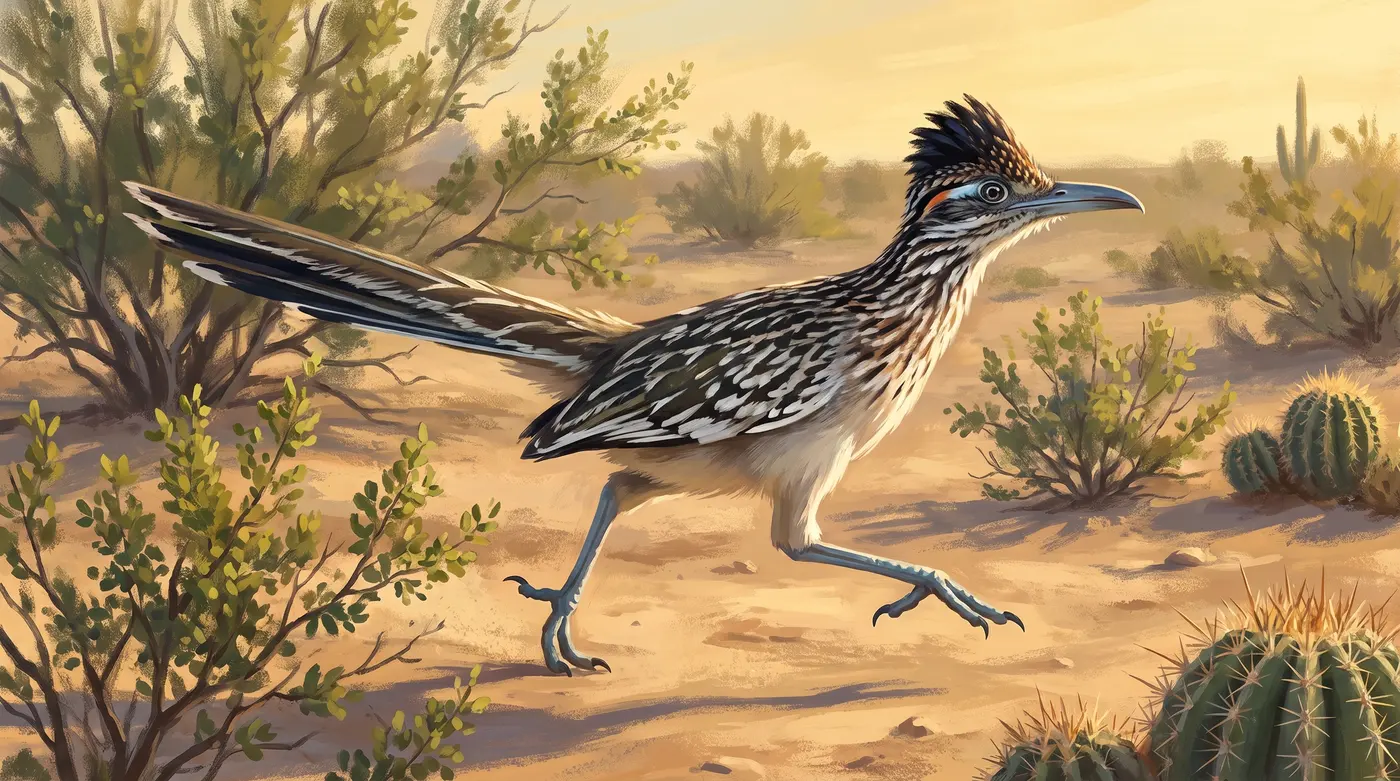
orients its body at sunrise so that the dark feathers on its back receive direct sunlight to warm up faster.
cuts its activity level in half during the hottest afternoon hours instead of moving around in the scorching sun.
uses its very long tail as a counterweight, rudder, and brake while sprinting through desert bushes and rocks.
kills its prey with a sharp beak blow and slams larger victims against a hard rock until they stop moving.
eats dangerous venomous rattlesnakes as well as scorpions, tarantulas, and large hairy spiders found in the dry desert.
makes a classic call consisting of a slow sequence of six low coos that gradually drop in pitch.
produces its alarm signal without using its voice by rapidly snapping the two halves of its beak together.
woos a female when the male offers her a lizard or snake, followed by wagging his tail and singing.
appears in famous cartoons as a blue bird eating seeds, but the real animal has streaked feathers and hunts snakes.
The quiz answers
Five questions about this animal. Pick an answer and find out if it is the right one.
Question 1 of 5
How fast does the roadrunner run?
Question 2 of 5
How does it handle cold desert nights?
Question 3 of 5
What is the function of its long tail?
Question 4 of 5
What does it actually eat?
Question 5 of 5
How long does a roadrunner pair stay together?
Try it yourself
Measure twenty-four inches of string and stretch it out on the ground to see the maximum wingspan of a desert bird that rarely flies.
Try running one hundred yards in twelve seconds to feel what twenty miles per hour looks like when sprinting fast across open land.
Place a black paper and a white paper in bright sunlight and feel them after ten minutes to see why dark feathers absorb heat quickly.
Data from Wikidata (Q634804) and Wikipedia (Greater roadrunner).