
- Status: Unknown
- Meadows, hedgerows, and grassy borders with dark nights
Numbers
- Length
- 1 inadult female; material does not state male length
- Lifespan
- 2 monthsabout 2 months as an adult
- Sighting distance
- 50 ftdistance from which the flying male detects the female light
- Energy lost as heat
- 2 percentalmost all energy from the chemical reaction turns into light
- Larva prey size
- 200 times its own weightsnails and slugs enormously heavier than the attacker
Ten fun facts
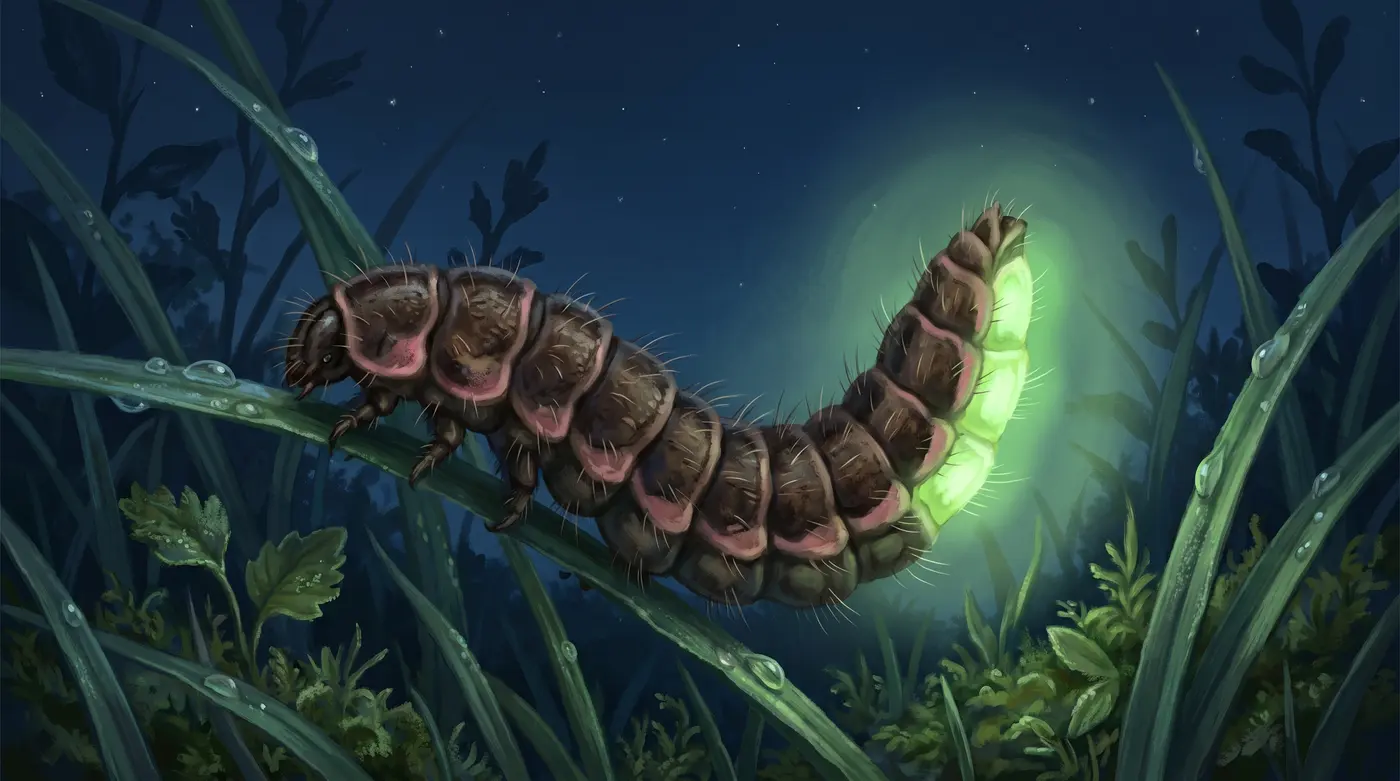
the male has wings while the female does not, so her body retains a larval form for her entire adult life.
the female glowworm can keep her bright light glowing for hours, whereas the male emits only very brief flashes of light.
the green glow shines from the last three abdominal segments, which the female lifts into the air to remain clearly visible.
this nighttime glowing ritual can repeat for up to ten consecutive nights, always occurring between ten o'clock and midnight.
a flying male glowworm can spot the glowing light of a female from a distance of fifty feet away in the dark.
only two percent of the chemical reaction energy is lost as heat, producing a light that is almost completely cold.
luciferin and luciferase are regulated by genes, meaning each individual glowworm emits a light that is subtly unique in its hue.
glowworm larvae live for two or three years and shed their outer skin four or five times before becoming full adults.
the larva bites snails and slugs to inject a digestive brown fluid that slowly paralyzes them and dissolves their body tissues.
a targeted prey animal sometimes manages to drag itself away while being eaten and survives the larva attack completely.
The quiz answers
The first one is the question printed in your book: here is the answer. The other four are extra.
Question 1 of 5★ this one is in your book
Which individual produces light for the longest time in this species?
Question 2 of 5
What does the adult female look like?
Question 3 of 5
How much energy from the reaction is lost as heat?
Question 4 of 5
What do the larvae feed on?
Question 5 of 5
In which months can the glowing ritual be observed?
Try it yourself
Measure fifty feet in your yard or down a hallway using a tape measure or by counting your steps to see how far a male spots a female.
On June and July evenings between ten and midnight, search for a glowworm by looking closely at the ground rather than the air because the female cannot fly.
Hold your hand near a glowing light bulb to feel its heat, remembering that a glowworm loses only two percent of its reaction energy as heat.
Data from Wikidata (Q852831) and Wikipedia (Lampyris noctiluca).