
Animals · Rivers, lakes and wetlands
Hippopotamus
Hippopotamus amphibius
One of the most dangerous herbivores
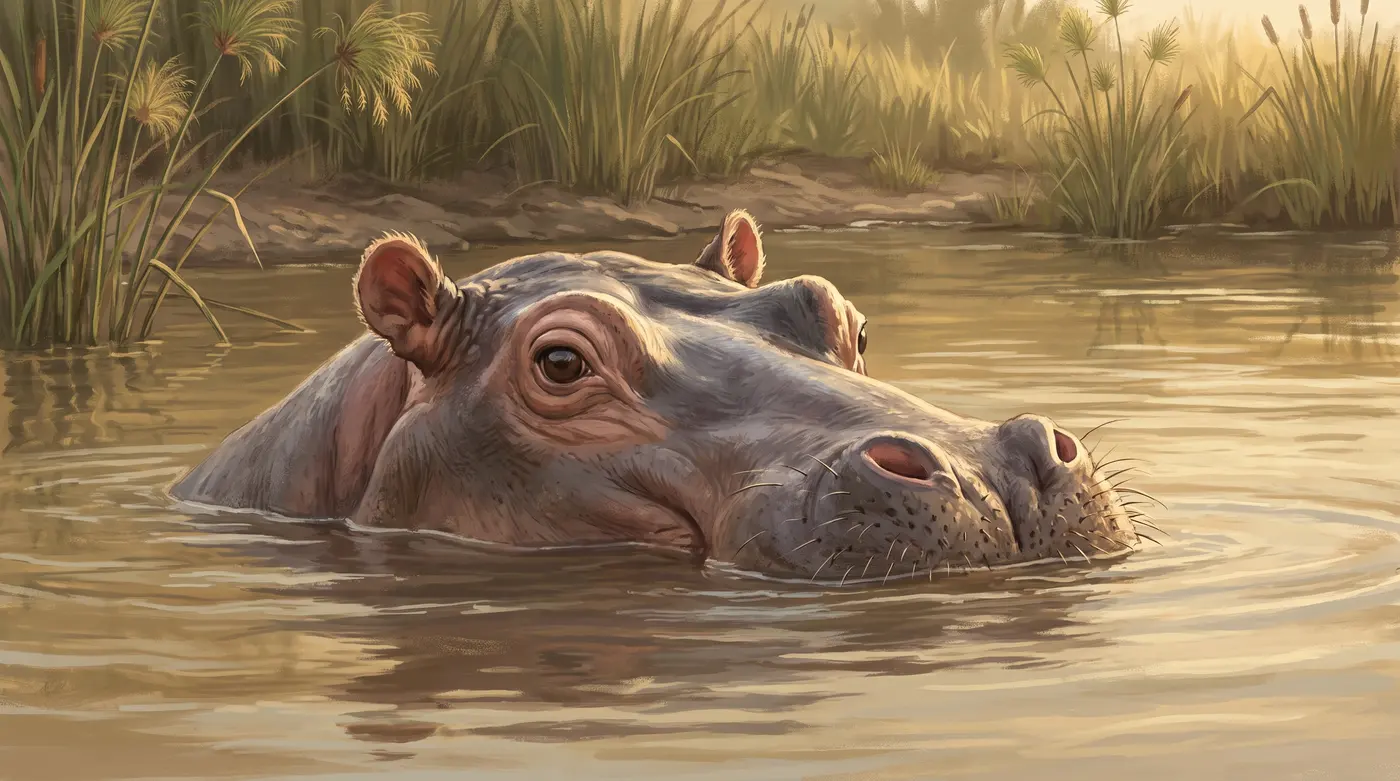
- Status: Threatened
- African rivers, lakes, and marshes, south of Khartoum in Sudan
Numbers
- Weight
- 4850 lbfrom 3,000 to 6,600 lb, up to 10,000 lb in exceptional individuals
- Length
- 11,5 fthead-body, from 11 to 12 ft
- Height
- 5 ftat the shoulder
- Lifespan
- 35 yearsfrom 30 to 40 years; average life span is lower due to high juvenile mortality
- Speed
- 30 mphcharging or fleeing
- Canine teeth
- 24 inexceptional record; normally up to about 20 in
- Bite force
- 1800 lbfabout 1,800 pounds of force, jaw pressure 1,800 psi
Ten fun facts
its skin produces a sticky reddish fluid that protects it from dehydration and looks like bloody sweat.
its closest living relatives are cetaceans, and their common semi-aquatic ancestor lived about sixty million years ago.
its body density is slightly greater than that of water, so it walks and bounces along the bottom instead of swimming.
an adult can hold its breath for up to five minutes, while a calf can stay underwater for only one or two.
its canine teeth grow throughout its life and in one exceptional case reached a length of over twenty-four inches.
it eats only ninety pounds of grass a day, which is just one percent of its weight and far less than other ungulates.
a newborn calf weighs seventy to one hundred ten pounds and reaches five hundred fifty pounds within its first year.
it learns to swim before it can walk and even nurses underwater while holding its breath and holding onto its mother.
a subordinate acknowledges a dominant male by spraying excrement onto its face in a submission display.
its dung fertilizes rivers and grasslands, while its grazing helps prevent savanna fires by keeping the grass short.
The quiz answers
Five questions about this animal. Pick an answer and find out if it is the right one.
Question 1 of 5
Which animals are the closest living relatives of the hippopotamus?
Question 2 of 5
How fast can a hippopotamus run when necessary?
Question 3 of 5
How does the hippopotamus move underwater?
Question 4 of 5
What is the function of the reddish fluid produced by its skin?
Question 5 of 5
How long can an adult hippopotamus stay underwater without breathing?
Try it yourself
Measure twenty-four inches with a tape measure to see the length of the largest recorded canine tooth of a hippopotamus. Compare it to the length of your arm.
Fill a basin with water and try to push down an object that barely floats. You will see why a dense body walks instead of swimming.
Hold your breath with a stopwatch in hand. An adult hippopotamus can stay underwater for five minutes, but a calf can manage only one or two.
Data from Wikidata (Q34505) and Wikipedia (Hippopotamus).