
Animals · Rivers, lakes and wetlands
Nile crocodile
Crocodylus niloticus
The second most powerful bite in nature
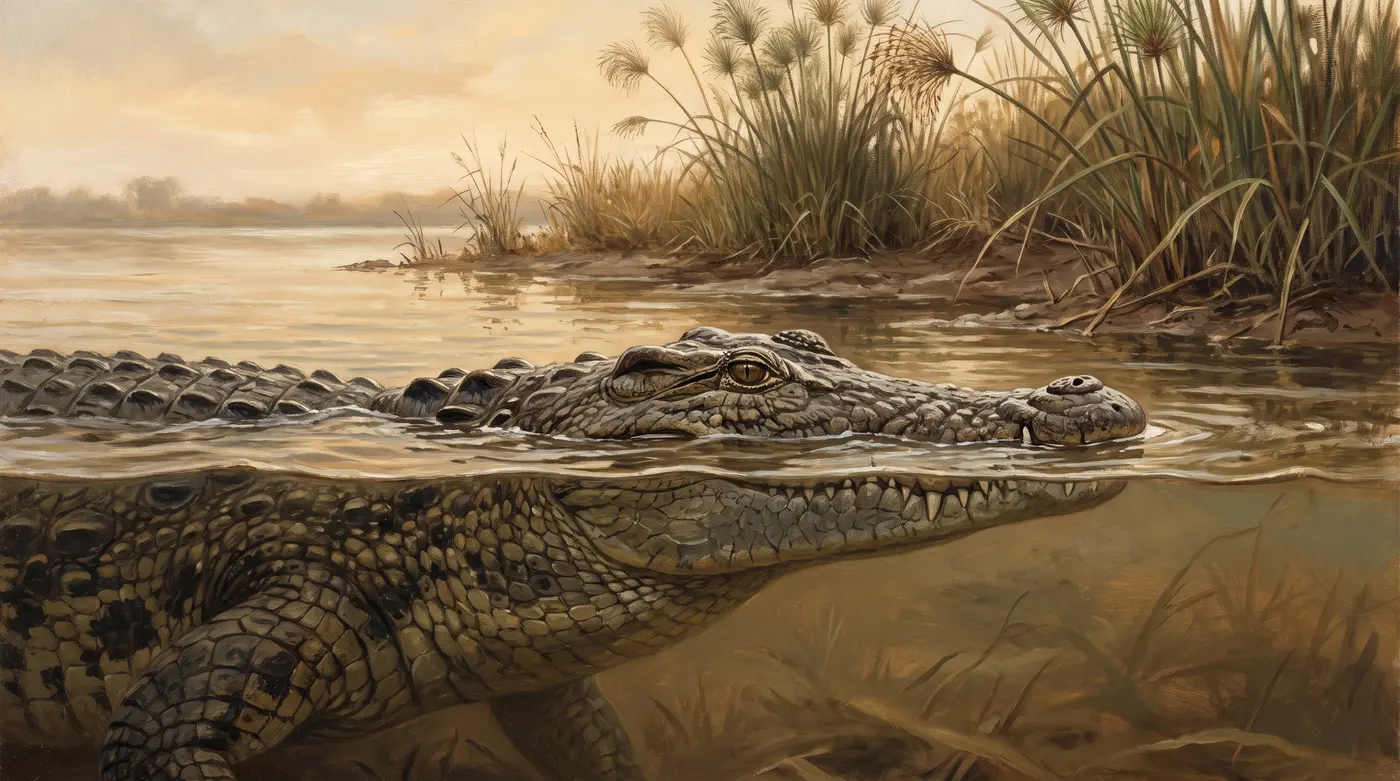
- Status: Safe
- African rivers, lakes, and pools, south of Lake Nasser
Numbers
- Weight
- 1080 lbfrom 500 to 1,650 lb, up to 2,200 lb in rare cases
- Length
- 14 ftfrom 11 to 16 ft, up to 20 ft in rare cases
- Lifespan
- 45 yearsfrom 40 to 60 years
- Bite force
- 16460 newtonsabout 3,700 pounds-force, second in nature after the saltwater crocodile
- Jaw closure speed
- 2 hundredths of a secondsnap of the jaws
- March in search of water
- 15 miduring droughts
Ten fun facts
that the gender of hatchlings depends on nest temperature, and below eighty-four degrees Fahrenheit only females hatch from the eggs?
that its jaws snap shut in just two hundredths of a second, which is much faster than the blink of an eye?
that its bite is the second most powerful in nature, surpassed only by the bite of the saltwater crocodile?
that it cannot chew its food and must tear off large pieces of meat to swallow whole because its teeth cannot cut?
that its teeth grow continuously throughout its entire life, always being replaced by brand new ones as they wear out?
that during droughts it can walk up to fifteen miles away from its river to find a new pool of water?
that it can tolerate saltwater, and one specimen was even spotted in the ocean channel separating Madagascar from mainland Africa?
that its front foot has five toes while its back foot has four toes, which are completely joined by webbed skin?
that a famous specimen from Lake Tanganyika named Gustave is said to be over twenty-two feet long and weigh two thousand pounds?
that the female lays twenty-five to one hundred soft-shelled eggs and guards her nest devotedly until they hatch?
The quiz answers
The first one is the question printed in your book: here is the answer. The other four are extra.
Question 1 of 5★ this one is in your book
What determines whether males or females hatch from the eggs?
Question 2 of 5
How fast do the jaws of the Nile crocodile snap shut?
Question 3 of 5
Why does the Nile crocodile not chew its prey?
Question 4 of 5
How far can it travel away from water during a drought?
Question 5 of 5
Which living animal has a more powerful bite than it does?
Try it yourself
Time two hundredths of a second on a stopwatch. You will fail, but that is how fast the jaws of this giant reptile snap shut on prey.
Use a tape measure to mark sixteen feet along your hallway floor. That is the impressive length of a fully grown adult Nile crocodile.
Place one thermometer in the sun and another in the shade to compare temperatures. Nest heat works similarly to decide if babies are male or female.
Data from Wikidata (Q168745) and Wikipedia (Nile crocodile).