
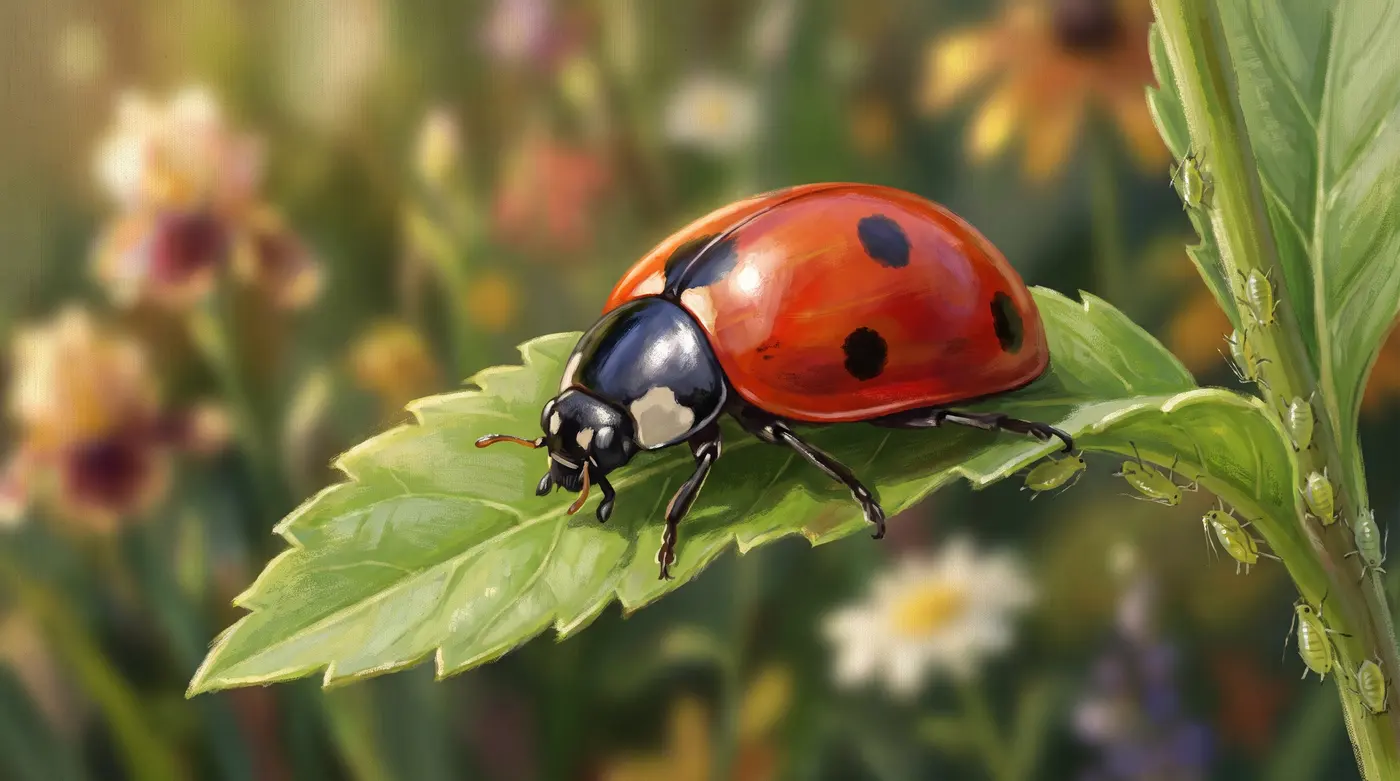
- Status: Unknown
- Gardens and open woodlands worldwide, wherever aphids are present
Numbers
- Weight
- 0,0014 ozApproximate weight for an adult of the species Coccinella septempunctata.
- Length
- 0,3 infrom 0.3 to 0.4 in
- Lifespan
- 5 weeksadult lifespan, from 4 to 6 weeks after emerging from the pupa; before that there are over three weeks as larva and one as pupa
- Eggs laid
- 2000 eggsproduced by a single female, yellowish in color
- Spots on elytra
- 7 spotsthree per elytron plus one on the seam, giving the species its name
- Larval stage duration
- 3 weeksa little over three weeks, followed by one week as a pupa
Ten fun facts
the name septempunctata means seven-spotted, referring to three black spots on each elytron and one on the dividing line.
it can pull its legs completely under its body, turning into a smooth dome that is almost impossible to grab.
a foul-smelling liquid oozes from its legs as a second line of defense right after its bright red warning color.
a single female can lay about two thousand yellowish eggs, an impressive amount for an insect under half an inch long.
ladybug larvae are also fierce aphid predators and do not wait to become adults before they start hunting for food.
the adult emerges from the pupa fully mature, with no extra growth period required before it can start reproducing.
its adult life lasts only four to six weeks, while the larval stage requires more than three full weeks.
its red elytra are not used for flying, but are hardened front wings that protect the delicate flying wings underneath.
under its black head lie powerful jaws, which serve as the main tool for catching aphids and other small insects.
in organic farming, ladybugs are used to control aphid infestations, which significantly reduces the need for chemical pesticides.
The quiz answers
The first one is the question printed in your book: here is the answer. The other four are extra.
Question 1 of 5★ this one is in your book
Where does the name septempunctata come from?
Question 2 of 5
What do larvae and adults eat?
Question 3 of 5
What is the ladybug's second defense after its color?
Question 4 of 5
How many eggs does a female lay?
Question 5 of 5
How long does a ladybug live after emerging from the pupa?
Try it yourself
Count two thousand grains of rice by arranging them into small piles of one hundred each to imagine how many eggs one female ladybug lays.
Mark four weeks from today on a calendar and then six weeks to see the short timeframe that makes up an adult ladybug's entire life.
Look under the leaves of a plant on your balcony to spot tiny green aphids, the primary prey that a ladybug hunts all day.
Data from Wikidata (Q159543) and Wikipedia (Coccinella septempunctata).