
- Status: Safe
- Arid regions of southwestern Africa: Angola, Namibia, Botswana, South Africa
Numbers
- Weight
- 2 lbup to 2 lb as an adult; Wikidata reports 26 oz and 1 oz separately, probably adult and pup
- Length
- 11 inhead and body, 10 to 11 in; tail separately measures 7 to 9 in
- Lifespan
- 10 years5 to 15 years in the wild, up to 20 in captivity
- Venom resistance
- 6 times the lethal dose for a rabbitsnake venom; also immune to scorpion venom
- Heat tolerance
- 5 hours at 104 °Fpanting like a dog
- Metabolism
- 58 % of standard metabolismcompared to a mammal of the same size
Ten fun facts
the meerkat can tolerate six times the snake venom dose that kills a rabbit, and resists scorpion stings completely.
the meerkat can survive five hours at 104 degrees Fahrenheit, panting like a dog to shed excess body heat.
a meerkat burns energy at fifty-eight percent the rate of other mammals its size, helping it save precious resources.
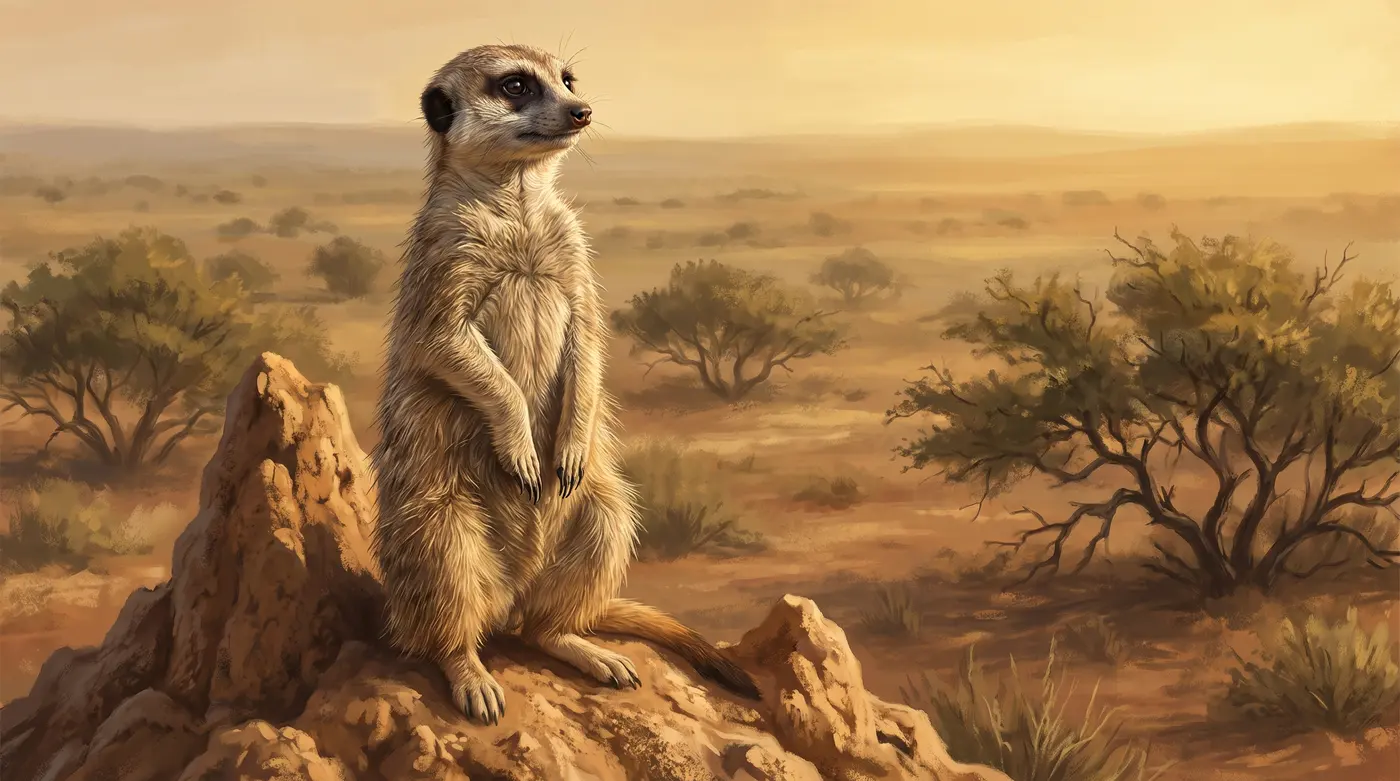
while the mob digs for food, sentinels keep watch atop termite mounds, with group members regularly switching guard duties.
the meerkat can tell a dangerous eagle from a harmless bird of prey, sounding the alarm only for real threats.
an adult babysitter will stay in the burrow all day without eating to guard young pups too small to forage.
meerkat burrows feature entrances six inches wide and lead down to underground tunnels five feet beneath the sand.
a typical meerkat group contains about ten individuals, but larger clans can grow to include as many as thirty.
meerkats rarely drink liquid water, getting nearly all their hydration directly from prey, desert tubers, and juicy melons.
the name meerkat comes from Afrikaans, combining words related to termites and mongooses, which are close biological relatives.
The quiz answers
The first one is the question printed in your book: here is the answer. The other four are extra.
Question 1 of 5★ this one is in your book
How many times the lethal snake venom dose for a rabbit can a meerkat tolerate?
Question 2 of 5
How large can a meerkat group get?
Question 3 of 5
How do meerkats guard the group while searching for food?
Question 4 of 5
What is a meerkat's metabolic rate compared to other mammals of the same size?
Question 5 of 5
How long can a meerkat endure temperatures of 104 degrees Fahrenheit?
Try it yourself
Mark 11 inches on a ruler to see the head and body length of a meerkat. Its tail is almost as long. Compare that to your sitting height.
Try standing perfectly still and alert like a sentinel for five full minutes while watching the horizon. Meerkats take turns doing this task all day long.
Calculate how many hours a day a meerkat spends digging for food if it spends between five and eight hours daily. That is over a third of its awake time.
Data from Wikidata (Q134015) and Wikipedia (Meerkat).