
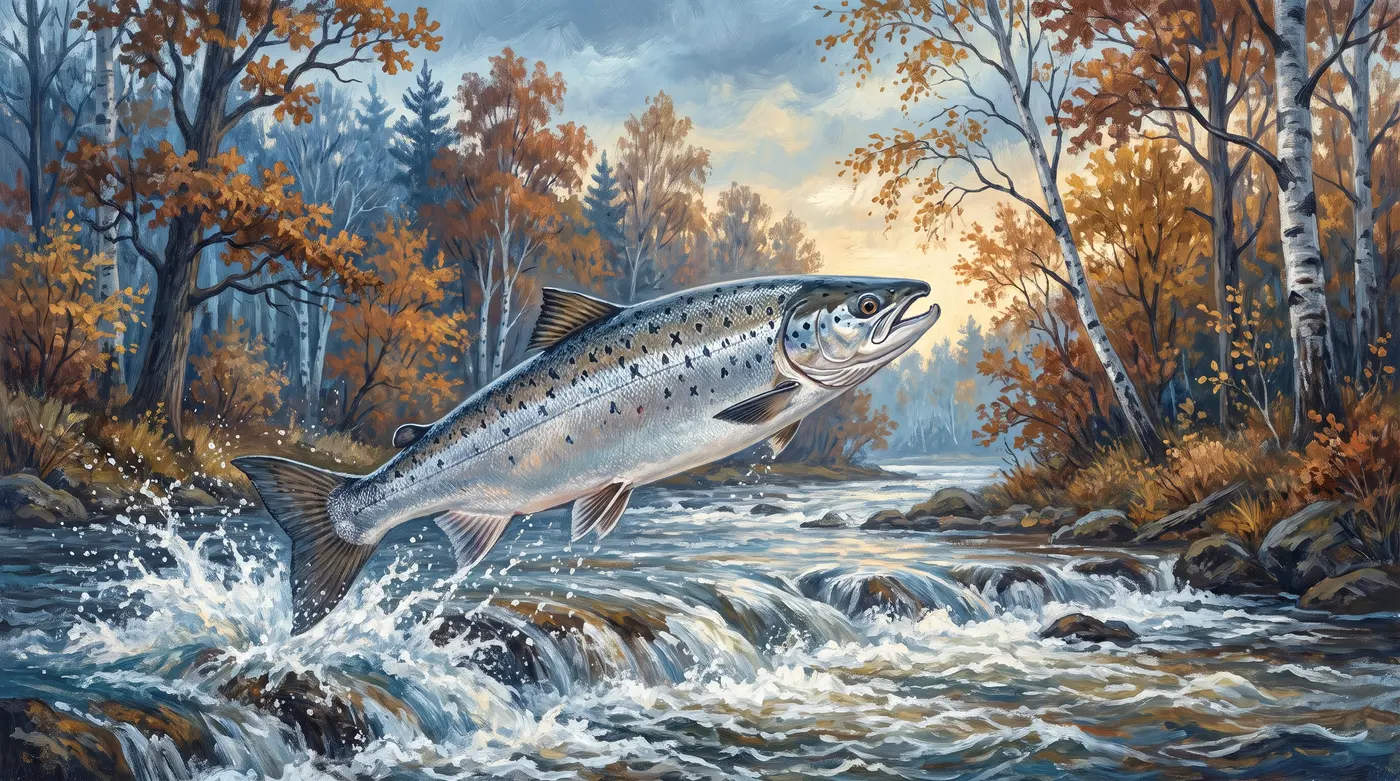
- Status: Threatened
- Rivers and cold seas of the North Atlantic, from Gascony to Greenland
Numbers
- Weight
- 100 lbmaximum weight, typical adults are much lighter
- Length
- 5 ftmaximum length
- Lifespan
- 5 yearsmost individuals live 4 to 6 years, maximum known is 13
- Maximum lifespan
- 13 yearsmaximum known age, most live much less
- Nest depth
- 6 inhollow dug by female in gravel
- Females surviving reproduction
- 40 percentalmost all males die instead
Ten fun facts
it finds the river where it was born thanks to an extraordinary sense of smell, even after spending years in the open ocean.
during its journey upriver to spawning grounds, it stops feeding completely, living solely on energy reserves stored while at sea.
the pink color of its flesh comes from crustaceans eaten during the months spent in estuaries before returning to the open sea.
after spawning, almost all males die, while up to forty percent of females manage to survive the difficult breeding process.
young Salmon change names as they grow, starting as fry, becoming parr after a year, and smolt when reaching four to six inches.
fish farms have bred strains so efficient that some researchers consider the Atlantic Salmon the very first fish domesticated by humans.
escaped farmed fish interbreed with wild populations, causing genetic pollution in natural stocks and reducing the survival rate of young fish.
aquaculture has introduced parasites into wild populations, such as a tiny copepod and a flatworm, which can cause mass die-offs.
ancient Romans called this fish salar, meaning jumper, and reported that it swam up the Rhine River in massive schools.
it has completely disappeared from the Mediterranean Sea and Italian fresh waters, where it once regularly swam up the rivers.
The quiz answers
The first one is the question printed in your book: here is the answer. The other four are extra.
Question 1 of 5★ this one is in your book
What does it mean that the Atlantic Salmon is an anadromous species?
Question 2 of 5
What does the Salmon do while swimming upriver to its breeding grounds?
Question 3 of 5
How does it recognize the river where it was born?
Question 4 of 5
What happens to most males after spawning?
Question 5 of 5
What have fish farms introduced into wild Salmon populations?
Try it yourself
Fill a small tray with gravel and dig a shallow depression six inches deep with your fingers, recreating the nest prepared by a female Salmon.
Unroll a tape measure up to five feet, which represents the maximum length that an adult Atlantic Salmon can reach out in the ocean.
Line up ten dry beans and take away six of them to see the four surviving females out of ten after laying their eggs.
Data from Wikidata (Q188879) and Wikipedia (Atlantic salmon).