
Animals · Rivers, lakes and wetlands
Amazon river dolphin
Inia geoffrensis
A cetacean that never sees the ocean
- Status: Endangered
- Rivers and flooded forests of the Amazon and Orinoco basins
Numbers
- Weight
- 350 lbfrom 220 to 440 lb (males up to 450 lb)
- Length
- 10 ftAmazon River individuals; Orinoco specimens are smaller
- Lifespan
- 15 yearsfrom 10 to 15 years (estimated)
- Head rotation
- 90 degreesdownward and to both sides, impossible for other cetaceans
- Distance from the ocean
- 1700 mimaximum documented distance upstream, in Peru and Bolivia
- Teeth per side
- 34 teeth24 to 34 on each side of each jaw
Ten fun facts
neck vertebrae are not fused together, allowing this animal to turn its head nearly ninety degrees downward and sideways.
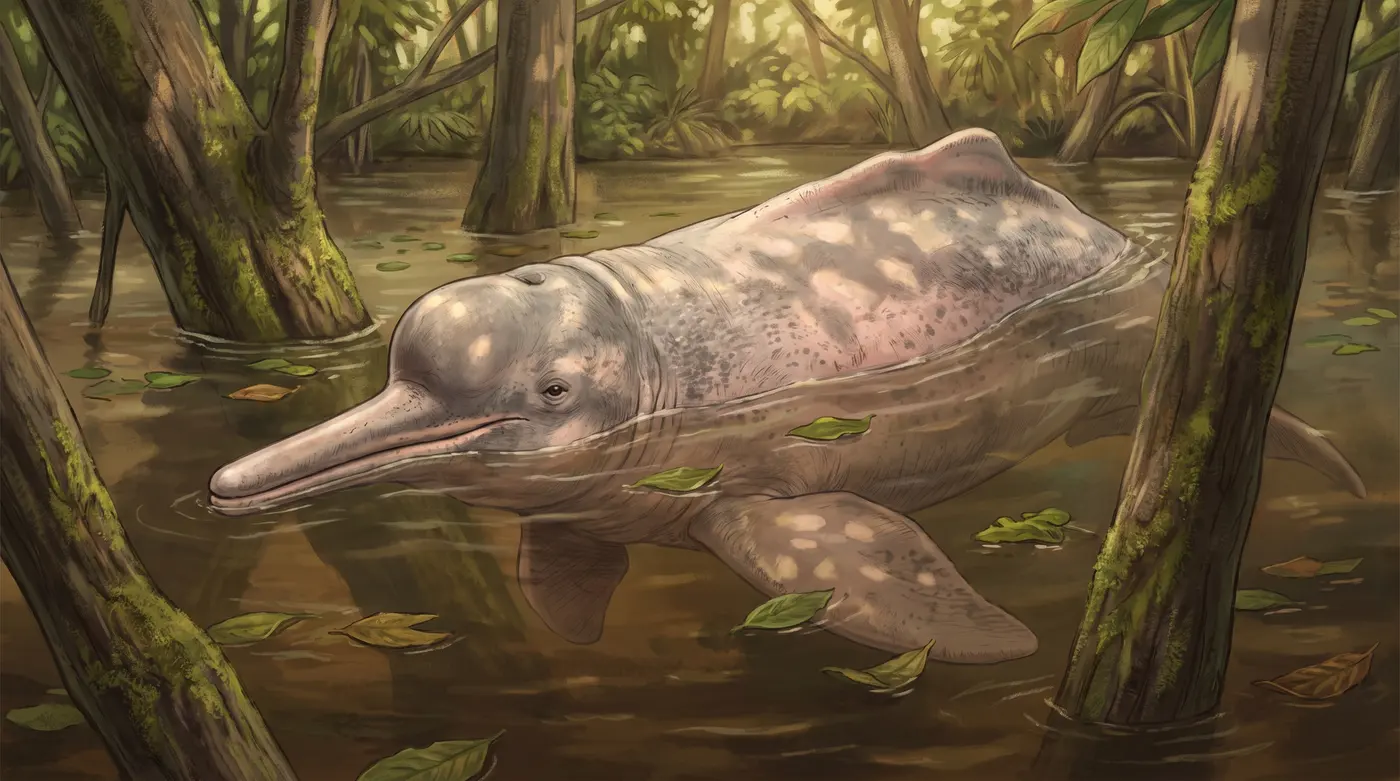
pink color comes not from skin pigment, but from blood vessels showing through the skin that release heat during exertion.
calf is dark at birth, turns gray as a juvenile, and takes on a pinkish hue only upon reaching full maturity.
dolphin travels up rivers up to seventeen hundred miles from the ocean into Peru and Bolivia, but never enters saltwater.
creature has twenty-four to thirty-four sharp teeth on each side of every jaw, all set along a tubular beak.
tubular beak is covered with short, stiff hairs, while its rounded melon forehead can change shape at will.
dorsal fin is replaced by a long, low hump, while its broad pectoral fins are also used to propel it.
species prefers tributaries, lakes, and flooded forests over the larger main rivers of the vast Amazon basin.
dolphins living in murky rivers are generally paler than those swimming in the clear waters of quiet lakes.
many Indigenous Amazonians do not hunt this animal due to ancient superstitions, which protected it for a long time.
The quiz answers
The first one is the question printed in your book: here is the answer. The other four are extra.
Question 1 of 5★ this one is in your book
Why can this cetacean turn its head more than others?
Question 2 of 5
What causes its pink color?
Question 3 of 5
How far upstream can it travel from the ocean?
Question 4 of 5
How long is the gestation period?
Question 5 of 5
What does it have instead of a dorsal fin?
Try it yourself
Try turning your head as far as possible without moving your shoulders and measure the angle. You will hardly reach the ninety degrees of this dolphin.
Measure thirty-one inches on a tape measure to see the maximum length of a newborn calf. Compare that measurement directly with your own height.
Find the Amazon River on a map and measure seventeen hundred miles inland from its mouth. That is how far upstream this species can travel.
Data from Wikidata (Q205329) and Wikipedia (Amazon river dolphin).