
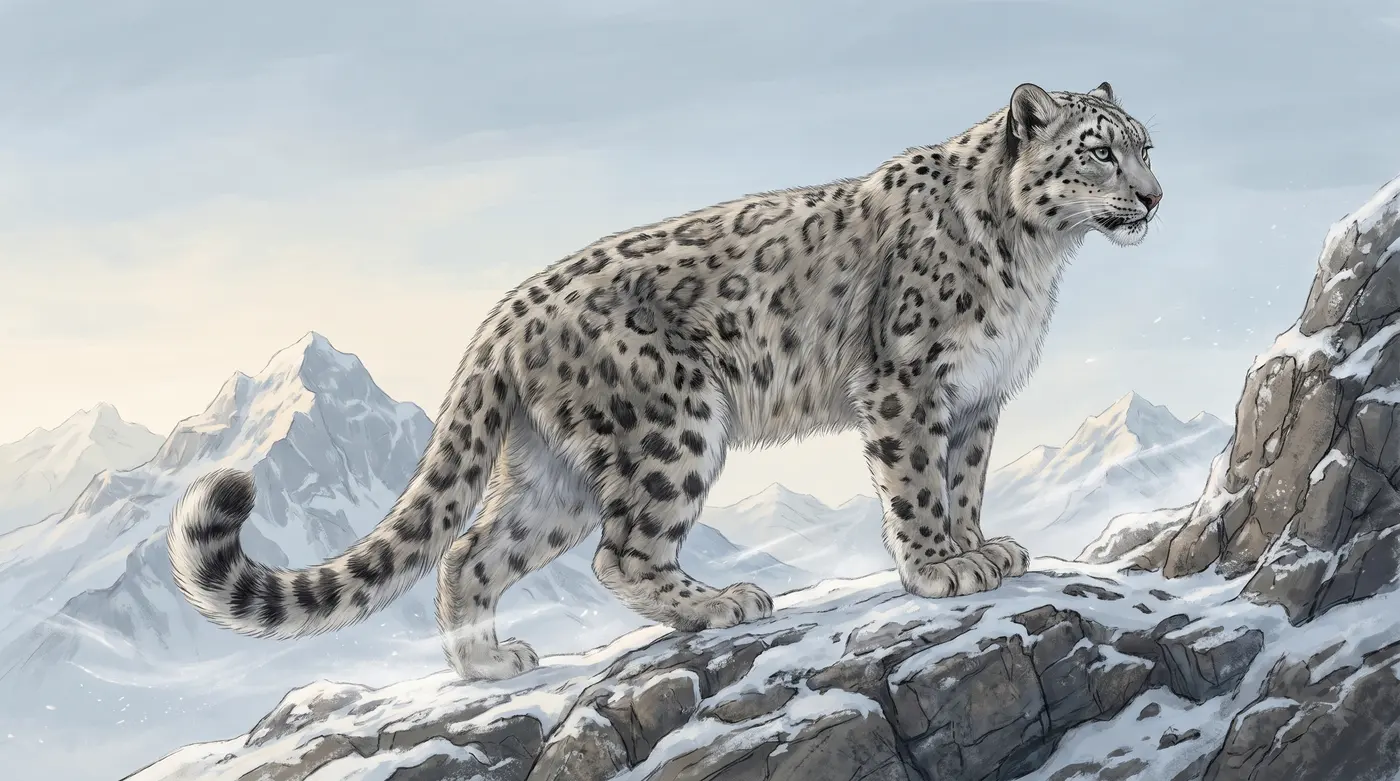
- Status: Threatened
- Mountains of Central and South Asia, between 10,000 and 15,000 feet
Numbers
- Weight
- 110 lbmales 100-120 lb, females 77-88 lb; recorded males up to 165 lb
- Length
- 44 inhead-body 30 to 60 in, not counting the 31-41 in tail
- Height
- 22 inat the shoulder
- Lifespan
- 16 years15-18 years in the wild, up to 25 in captivity
- Tail length
- 41 inrange 31-41 in, almost as long as the body
- Maximum elevation
- 20000 ftin summer, above the tree line
- Chase distance
- 1000 ftdown steep slopes after the initial leap
Ten fun facts
it cannot roar because its vocal cords are less than half an inch long, which is not enough to resist air flow.
its calls include meows, grunts, and a soft chuffing noise, and it can purr continuously as it breathes out.
its thick tail reaches forty-one inches in length and gets wrapped around its face like a warm blanket during sleep.
its fur is up to five inches long and the thick padding beneath its paws provides excellent grip on loose rock.
it is the closest living relative of the tiger, having split from a common ancestor over three million years ago.
its scientific name comes from an old French word that originally referred to another wild cat, the Eurasian lynx.
it can walk through snow up to thirty-three inches deep, but it usually prefers following trails made by other animals.
a single blue sheep provides enough food for two weeks, meaning it needs only about twenty to thirty full-grown prey per year.
forty percent of the protected reserves in its mountain habitat are smaller than the home range of a single male.
its canine teeth measure over an inch long and are notably slender compared to those of other big cats in its group.
The quiz answers
Five questions about this animal. Pick an answer and find out if it is the right one.
Question 1 of 5
Why is the snow leopard unable to roar?
Question 2 of 5
What is the primary function of its unusually long tail?
Question 3 of 5
Which animal is the closest living relative of the snow leopard?
Question 4 of 5
How long can a single large prey animal sustain it?
Question 5 of 5
What is the main threat facing this species today?
Try it yourself
Unroll forty inches of tape or yarn. That is the length of its tail. Try wrapping it around your face, just like this cat does to stay warm.
Measure a third of an inch on a ruler. That is the tiny length of vocal cords that prevents this big cat from making a loud roar.
Mark thirty-three inches up on a wall and compare it to your height. This shows how deep the mountain snow can get while it still walks forward.
Data from Wikidata (Q30197) and Wikipedia (Snow leopard).