
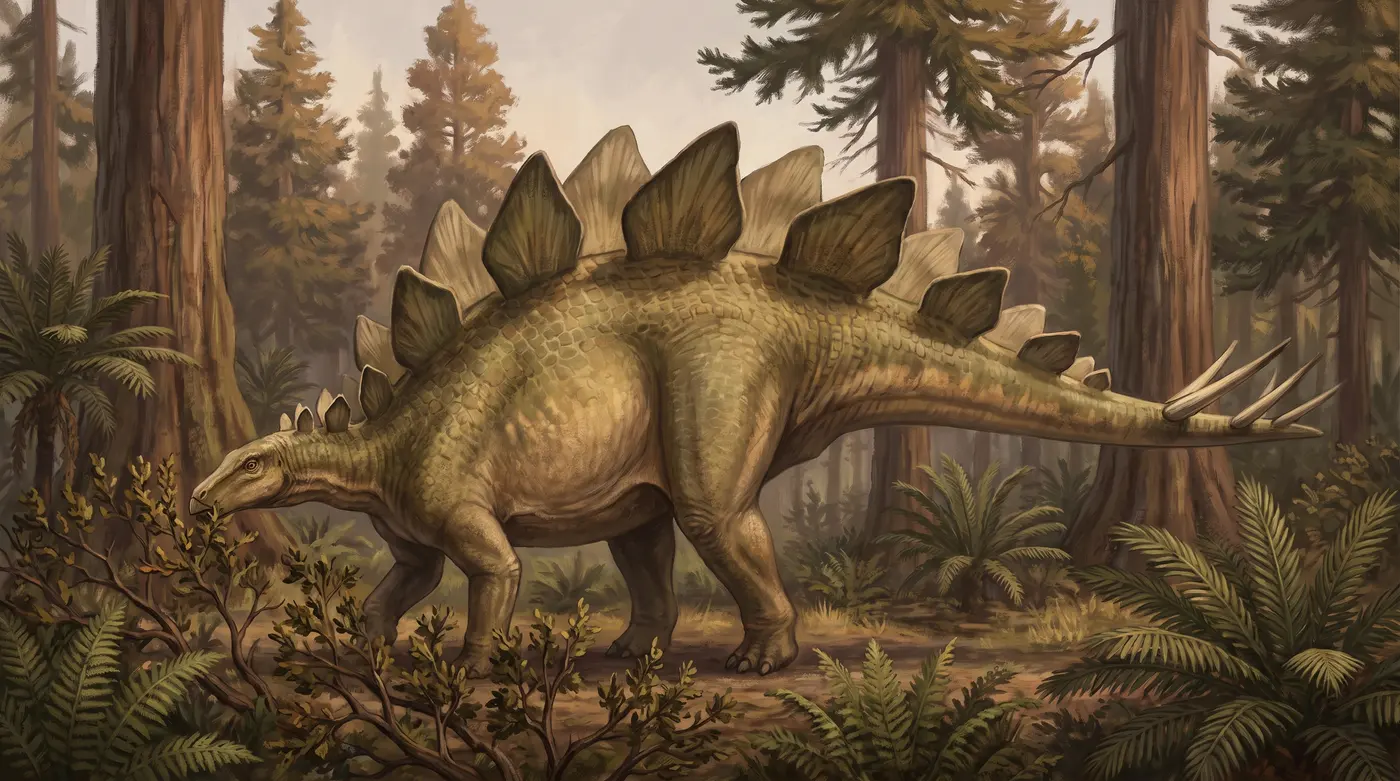
- Status: Extinct
- Fossils in the western United States and Portugal
- Extinct
Numbers
- Weight
- 8 tonvalue from Wikidata; the reference text mentions a weight of over 5 tons
- Length
- 30 ftup to 38 feet in an old specimen of S. ungulatus
- Height
- 10 ftvalue from Wikidata; a teenage specimen measured 6.5 feet in height
- Lifespan
- 155 million years agoLate Jurassic, between Kimmeridgian and Tithonian: 155 to 145 million years ago
- Back plates
- 24 inthe largest, on the sides, two feet wide and tall
- Tail spikes
- 3 ftfour spikes, the structure called a thagomizer
- Brain weight
- 3 ozin an animal of over 5 tons
Ten fun facts
the name of its tail spikes, the thagomizer, comes from a comic strip by Gary Larson and entered official scientific texts.
the scientist Marsh first thought he found a giant sea turtle, which led to the name meaning roof lizard.
the plates were not attached to the skeleton, but only to the skin, just like the skin bones of crocodiles.
no two plates on the same individual were identical in shape or size, not even those right next to each other.
a teenage specimen found in Wyoming in 1994 measured fifteen feet long and weighed about two and a half tons.
the brain cavity cast created by Marsh in 1880 remains the smallest known brain cast among all dinosaurs.
a study revealed clear damage on the tail spikes of nearly ten percent of all examined specimens.
an Allosaurus backbone fossil was found with a hole that fits a Stegosaurus tail spike perfectly.
the front feet had five toes while the back feet had only three stubby toes supported by thick pads.
many museum skeletons are assembled from the bones of several individuals because complete skeletons were rare.
The quiz answers
Five questions about this animal. Pick an answer and find out if it is the right one.
Question 1 of 5
How many spikes did it have at the end of its tail?
Question 2 of 5
How were the back plates attached?
Question 3 of 5
What did it have instead of front teeth?
Question 4 of 5
How much did its brain weigh?
Question 5 of 5
In which period did it live?
Try it yourself
Cut a diamond shape measuring two feet by two feet out of cardboard to match the largest plates. Stand it up to see how huge it is.
Weigh three ounces of flour on a kitchen scale to see the brain size of an animal that weighed over five tons.
Unroll a measuring tape on the floor up to three feet. That was the length of just one of the four spikes on its tail.
Data from Wikidata (Q14388) and Wikipedia (Stegosaurus).