
- Status: Safe
- Savannahs and grasslands of Eastern and Southern Africa
Photos and pictures
8 pictures: tap to see them large.
Photo: Pseudopanax at English Wikipedia · Public domain
Wikimedia Commons · original
Numbers
- Weight
- 620 lb (280 kg)range 385-850 lb; males can outweigh females by 10 percent
- Length
- 90 in (2.3 m)body 85-97 in, tail excluded; tail measures about 20 in
- Height
- 50 in (1.3 m)at the shoulder, range 43-57 in
- Lifespan
- 20 yearsup to 20 years in the wild
- Longest migration
- 700 mi (1,100 km)in search of rain and pastures, often alongside other herbivores
- Maximum altitude
- 14,000 ft (4.3 km)on Mount Kenya
- Maximum distance from water
- 18 mi (29 km)rarely move farther away
Ten fun facts
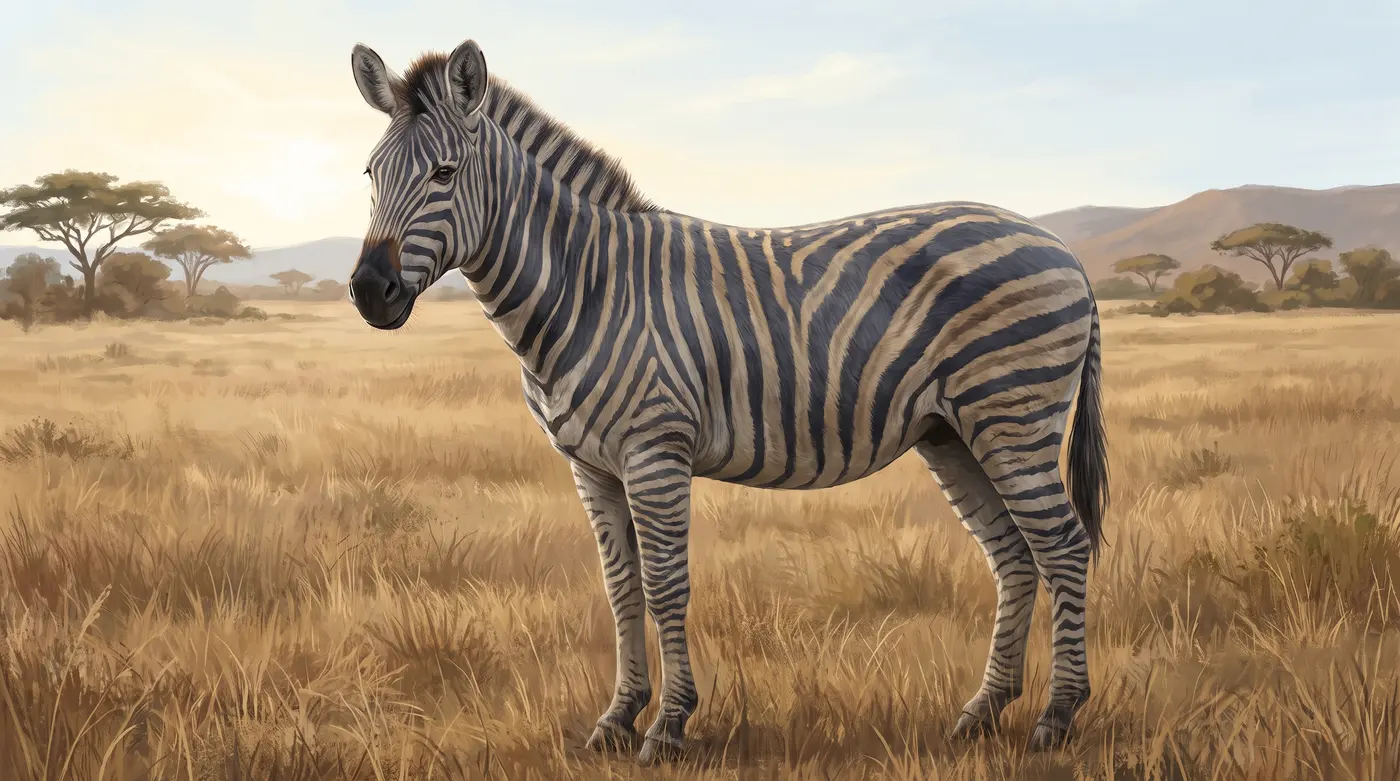
No two zebras have the exact same stripe pattern: every individual is recognizable just like by a human fingerprint.
Zebra embryos display a dark background color, and their white stripes only appear at a later stage of development.
The quagga, a now extinct subspecies of zebra, was the very first extinct creature whose DNA was studied.
During seasonal migrations, plains zebras can travel up to seven hundred miles in search of rain and green pastures.
Zebras live in family groups called harems, as well as bachelor groups of two to fifteen young males.
Researchers have documented at least six distinct vocal calls, including a characteristic contact call that sounds like ah-ha.
The diet of the plains zebra consists of ninety-two percent grasses, with shrubs making up only two percent.
Nearly half of all zebra foals die before reaching adulthood, mostly due to predators, disease, or food shortages.
Plains zebras are found from sea level all the way up to fourteen thousand feet on Mount Kenya.
Zebras often form mixed herds with wildebeests during migrations, combining better zebra vision with better wildebeest hearing.
The quiz answers
Five questions about this animal. Pick an answer and find out if it is the right one.
Question 1 of 5
Why are no two zebras identical?
Question 2 of 5
What is the small family group of a zebra called?
Question 3 of 5
How many miles can a zebra migration cover?
Question 4 of 5
Which animal does the zebra often form mixed groups with?
Question 5 of 5
What do zebra embryos show?
Try it yourself
Mark seven hundred miles on a map starting from your home: that is the incredible distance a zebra can travel during a single migration.
Draw stripes on a sheet of paper without looking at a classmate's work: just like zebras, you will discover that your pattern is completely unique.
Find a mountain peak of about fourteen thousand feet on a map: that is the highest altitude where some zebras live on Mount Kenya.
Data from Wikidata (Q245305) and Wikipedia (Plains zebra).