
- Status: Safe
- Deep waters of all warm and temperate oceans
Numbers
- Weight
- 2 lbup to 2 lb for females
- Length
- 7 inadult female, male does not exceed 1 in
- Lifespan
- 25 yearsup to 25-30 years for females
- Depth
- 15000 ftmesopelagic and bathypelagic life, rare catches around 300 ft
- Prey swallowed
- 9 infound inside a specimen little over 2 in long
- Male size
- 1 insix times smaller than the adult female
Ten fun facts
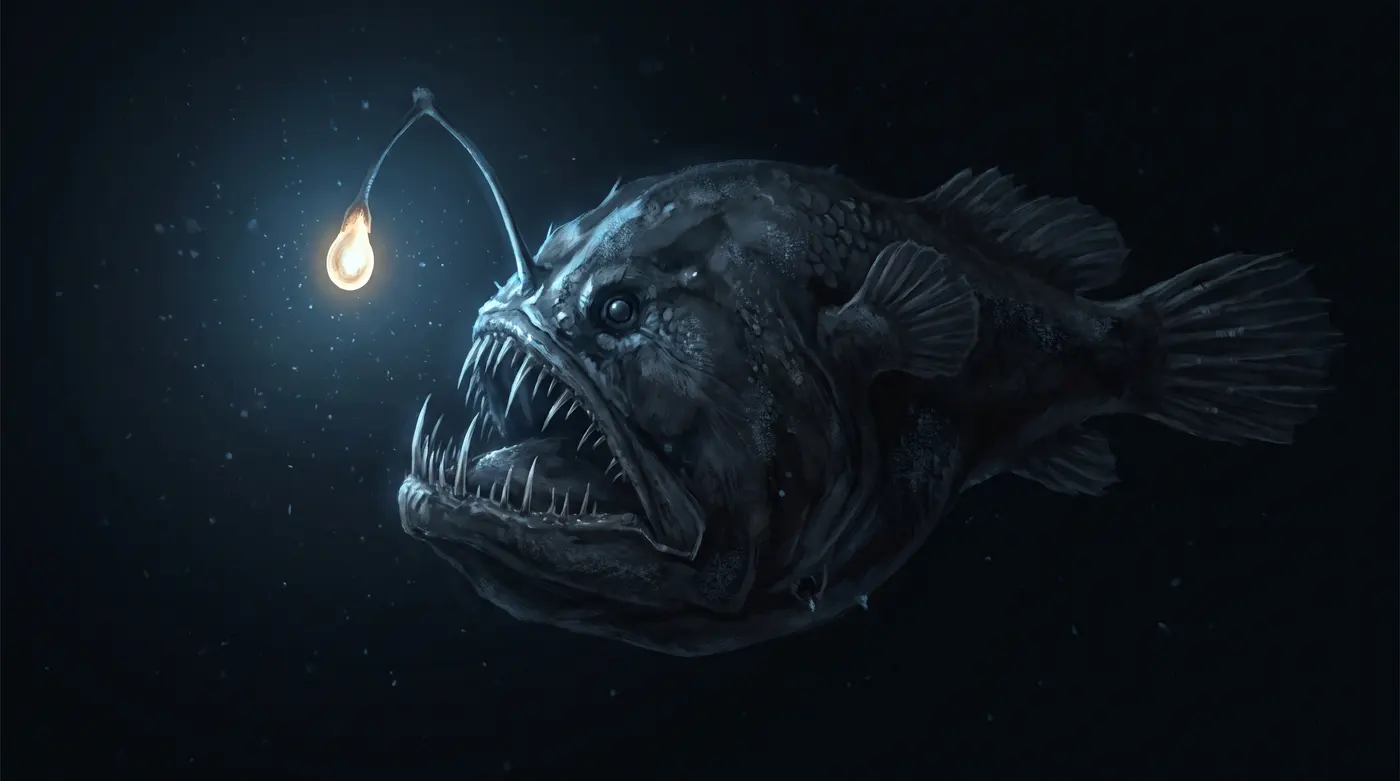
that the glowing lure on the female's forehead is called an illicium and carries light-producing photophores at its tip?
that inside a specimen little over two inches long, scientists discovered another fish that measured nine inches?
that a stretchy stomach and enormous jaws allow this predator to swallow prey much larger than itself?
that the adult female reaches seven inches while the male stays under one inch, making them look like different species?
that in the female deep-sea anglerfish, the head alone makes up more than half of the entire body?
that this fish swims down to fifteen thousand feet deep, where no trace of sunlight ever reaches?
that young larvae live much higher up than adults, staying within the top three hundred feet of the ocean surface?
that in February 2025, a living specimen was filmed off Tenerife and the video quickly became an internet sensation?
that scientists still do not know if the male fuses with the female forever or detaches after biting her?
that it has been found inside the stomach of a lancetfish, one of its few documented natural predators?
The quiz answers
Five questions about this animal. Pick an answer and find out if it is the right one.
Question 1 of 5
What is the glowing antenna on the forehead called?
Question 2 of 5
How deep can this species live?
Question 3 of 5
How big is the adult male?
Question 4 of 5
What was found inside a specimen just over two inches long?
Question 5 of 5
Why are sightings of live specimens so rare?
Try it yourself
Cut two paper strips, one seven inches long and one just one inch long, to compare the adult female and male of the same species.
Place a marble inside a balloon and inflate it slightly to see how a stretchy stomach can hold a truly giant piece of food.
Turn off the light and switch on a small flashlight three feet away to see all the light available fifteen thousand feet below.
Data from Wikidata (Q535212) and Wikipedia (Humpback anglerfish).